
By Kristina Moskalenko
Miami’s most exclusive square mile isn’t just a retail mecca — it’s a generational passion project with roots in the golden age of catalogues and the grit of post-war ambition. Meet the heir reinventing Bal Harbour Shops for the next era of luxury.
Can You Turn a Mall into the American Dream? Bal Harbour Thinks So.
The history of luxury isn’t just a story of brands — it’s a story of characters. Mavericks who mixed business acumen with an artist’s eye. Founders whose personal mythology fuels places, not just products. Think of St. Barths and its swashbuckling godfather Rémy de Haenen. Or head north to Florida, where another name carries similar legend: Bal Harbour.
Nestled just above Miami Beach, Bal Harbour is more than a zip code. It’s a self-contained ecosystem of wealth: $5,000-a-night suites, five-star beachfronts, and America’s most profitable shopping centre by square foot. But the beating heart of this polished enclave? A family story that begins — as many great American tales do — with a bold gamble and a blank patch of land.
We meet Matthew Whitman Lazenby, grandson of Bal Harbour Shops founder Stanley Whitman, inside the very mall his grandfather built in 1965 — now undergoing a transformation that could redefine luxury retail once again.
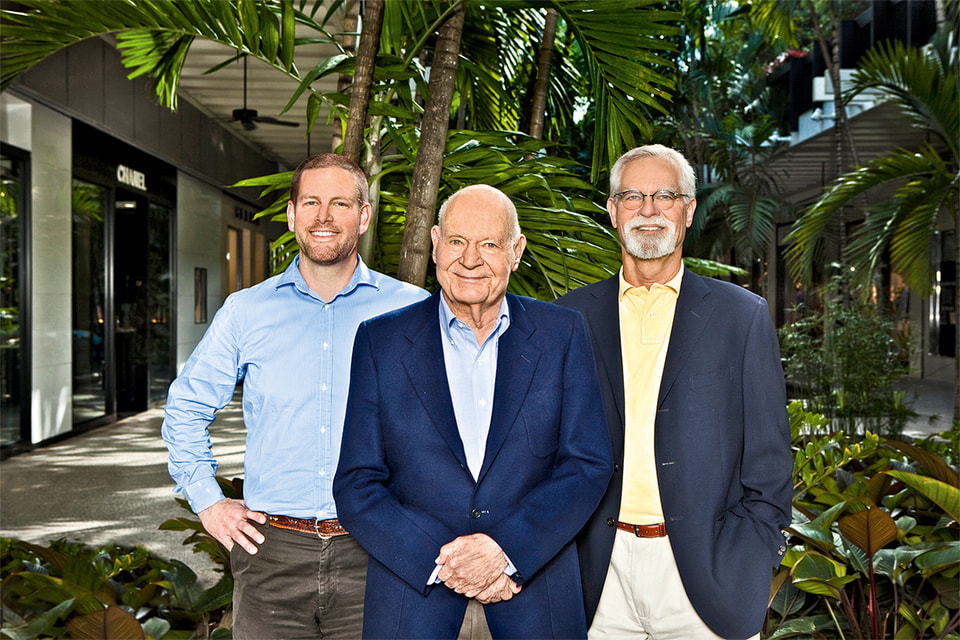
“My grandfather’s family was in printing business in Chicago — they worked on the 1,200-page Sears Catalog. That was the internet back then,” Matthew smiles. “But on the way to California in the 1920s, they stopped in Florida. There were mosquitoes — and opportunity”.
What followed was a masterclass in American reinvention. The Whitmans built one of the first homes in Miami Beach — it still stands, Matthew notes with a grin, despite climate doomsayers. But after WWII, tragedy struck: Stanley’s father died just as he returned from college, and his mother sold off the family’s print holdings, plunging everything into stocks and land.
And then came the plays — not on Wall Street, but along Collins Avenue, where Stanley Whitman acquired and flipped oceanfront plots like a grandmaster on a sun-bleached chessboard. “There’s barely an inch in Bal Harbour he didn’t buy or sell at some point,” says Matthew. “He had the reputation of a brilliant broker — but his real genius was vision.”
Bal Harbour Shops was that vision. A mall, yes — but also a blueprint for what would later be called “experiential luxury.” Long before Instagram influencers and branded pop-ups, Stanley knew that shopping could be theatre, and Bal Harbour was the stage.
However back then in 1950’s the plots were still owed by Robert Graham, the original master planner.
A meticulous urbanist with a flair for order, it was Graham who mapped out Bal Harbour with surgical precision — beachfront lots for hotels, quiet enclaves for single-family homes, and designated slots for apartment buildings. It was an unusually forward-thinking approach for mid-century Florida, where most growth followed chaos rather than calculus.
But when it came time to build a commercial centre, Graham retired. That, it turned out, was the cue for Stanley Whitman, Matthew’s grandfather — a bold entrepreneur with an audacious idea.
In 1957, Whitman purchased a 16-acre plot of land (some 64,750 square metres), then still occupied by abandoned army barracks, and announced he would build an open-air luxury shopping centre. The reaction? “They called him crazy,” laughs Matthew.
At a time when malls meant utilitarian boxes filled with tailors, dentists and hardware stores — and almost always tucked under air-conditioned roofs — Whitman envisioned something radical: a garden of retail delights, where designer boutiques would open directly onto palm-shaded walkways and alfresco cafés. Dior instead of dry cleaners. Sandals instead of snow boots. Glamour, not groceries.
It was 1965. Miami was still rough around the edges. And yet, the future of experiential luxury had just found its blueprint.
Stanley’s idea was radical. He wasn’t targeting locals running errands — he was chasing jet-setters. He imagined something open-air, lined with palm trees instead of fluorescent lights. Boutiques would specialise in fashion, not function. Shoppers wouldn’t just visit — they’d linger. Cafés, restaurants, and manicured gardens would create a day-long experience, not just a transaction.
And when it opened in 1965, this Eden of elegance was met with polite confusion — and a fair bit of ridicule. “They called him crazy,” Matthew says. “But 60 years later, it’s clear who got the last word.”
Bal Harbour is now retail’s most lucrative square mile. According to the International Council of Shopping Centers, as published in Shopping Centers Today, it leads the world in revenue per square foot — a figure that’s become legend in industry circles.
But success comes with its own kind of pressure. When Dior wants more space, you don’t say no — you build. And build they have.
In 2017, Bal Harbour Shops received final approval for an ambitious expansion plan more than a decade in the making. The transformation will increase total retail space to 350,000 square feet, with 70 new boutiques poised to join the lineup.
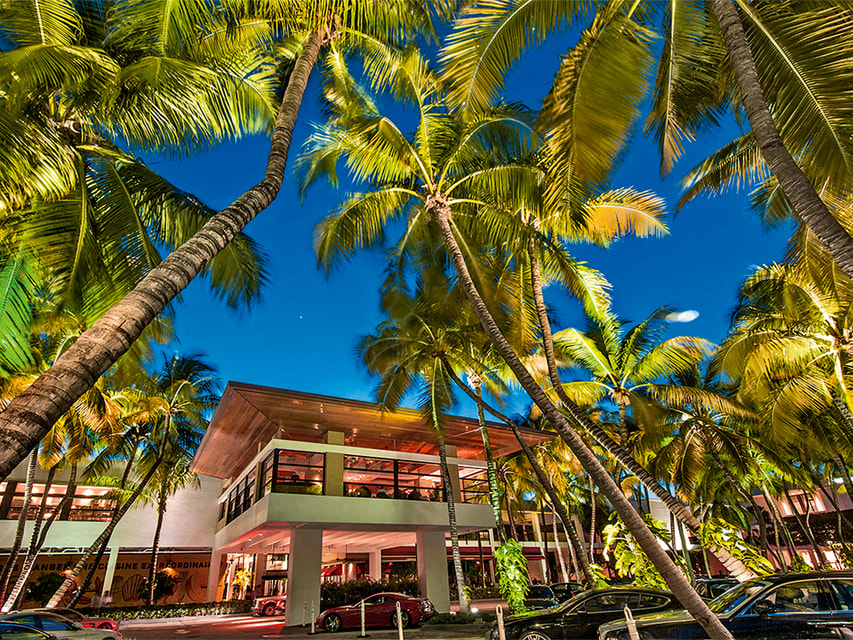
Among the highlights? The Southeastern U.S.’s first-ever Barneys New York, complete with the iconic Freds at Barneys restaurant — a high-low cult favourite among New York fashion editors and LA power-lunchers alike.
“We’re not just adding stores — we’re evolving the experience,” Matthew says. “Bal Harbour isn’t a mall. It’s a mindset.”
From Shopping Temple to Cultural Oasis: The Future of Bal Harbour
Luxury, in its most modern form, is no longer just about logos — it’s about lifestyle. And nowhere is that shift more striking than at Bal Harbour Shops, where plans for expansion are not only architectural, but cultural.
“We’re moving the parking and building not just more retail, but a proper piazza,” says George Gonzalez, General Manager of Bal Harbour Shops. “It will be a place for art exhibitions, wine festivals, organic farmers’ markets, even concerts.”
This new plaza — lush, sun-dappled, and unmistakably Miami — is designed not simply for shopping, but for browsing fresh produce with a glass of rosé. For stumbling upon a ballet pop-up at golden hour. It’s a vision shaped by research into what Bal Harbour guests crave most: culture, just behind fine wine, exceptional cuisine, and the chance to unplug in style.
“Ideally, we’d love our own museum,” Gonzalez admits. “But since we don’t have the space, we offer complimentary access to Miami’s major institutions — and in the meantime, we host rotating exhibitions, beachside dance events, installations, and gastronomic festivals.”
Another emblem of Bal Harbour’s manicured magnificence — with its velvet lawns, sculpted flowerbeds and impossibly pristine beach — is the St. Regis.

With its mirror-clad lobby echoing Miami’s Art Deco spirit and a private Atlantic-facing stretch of sand, the St. Regis isn’t just another five-star hotel. It’s the benchmark. Rebuilt from the ground up and unveiled in 2012, the property blends architectural gravitas with whisper-quiet service that feels more Geneva than Florida.
Forgot your sunglasses en route to the pool? They’ll magically appear on your lounger within minutes — no call, no fuss.
It’s this level of attentiveness that distinguishes St. Regis in a city not exactly known for seamless service. Balconies are expansive, suites are vast, but it’s the soft power of precision that seduces repeat guests.
Afternoon tea arrives in a gilded phoenix-cage pastry tower. The house Bloody Mary? A secret recipe, endlessly imitated but never matched. And for those who truly prefer the upper echelons of indulgence, there’s the world’s most expensive macaron: yours for $9,703. Presented in a crystal Lalique case, it comes with a night in the Ambassador Suite — four bedrooms, ocean views, and, of course, a butler on call.
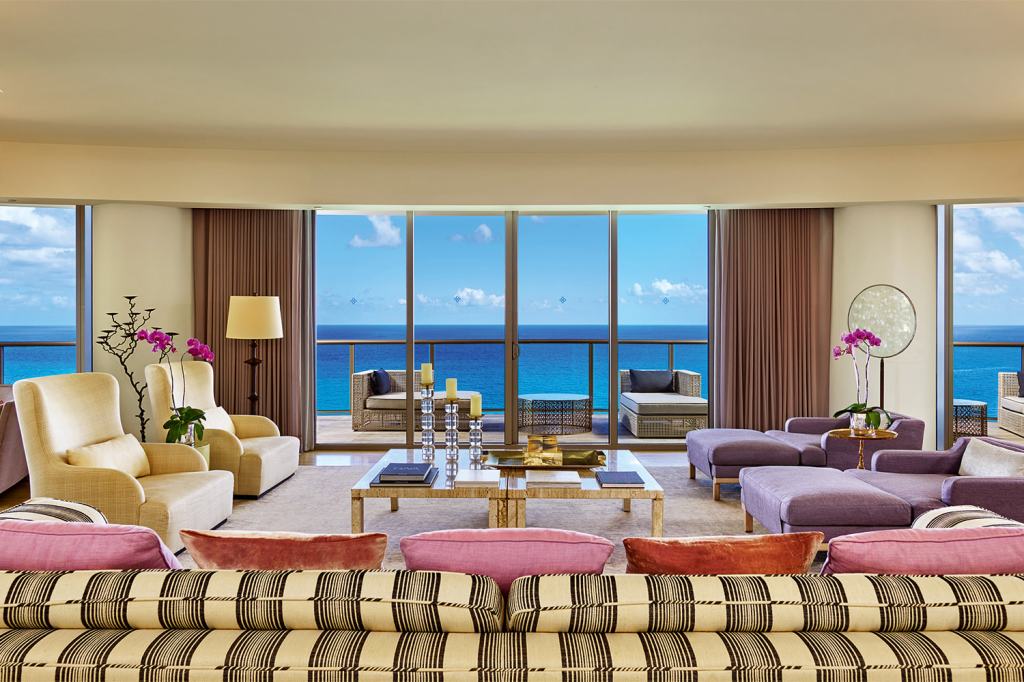
“Our guests expect the exceptional,” says Nikolai Ursin, Director of Marketing. “And exclusivity drives demand — the more rarefied, the more desired.”
The St. Regis complex comprises three towers, though only the central one is a hotel. The others? Private residences whose owners enjoy full access to all hotel services — from spa bookings to late-night lobster rolls.
“Bal Harbour is the only neighbourhood in Miami that wasn’t built in a rush,” Matthew Whitman Lazenby reflects. “It was designed from the beginning — and that identity still holds everything together, ensuring that everything works smoothly.”
In a city of gleaming chaos and overnight towers, Bal Harbour is a rarefied exception: a place where luxury is planned, not performed.
As Miami’s skyline stretches higher and wider, Bal Harbour doesn’t just stay relevant — it defines what relevance looks like for the next generation of ultra-affluent travellers, collectors, and tastemakers.
Originally published at: https://www.vedomosti.ru/kp/deluxe/article/2018/11/28/787781-amerikanskaya-mechta
 Articles on film, luxury lifestyle, culture and tech
Leave a comment