
By Kristina Moskalenko
The Oscar-winning director dives deep into the subconscious in his latest psychological thriller.
Released internationally on March 27, Trance is the new psychological thriller from Slumdog Millionaire director Danny Boyle. The film follows a stolen $25 million painting, a memory-impaired auctioneer, a dangerous gangster, and a mysterious hypnotherapist.
James McAvoy stars as Simon, an art auctioneer with amnesia after a violent heist. Vincent Cassel plays Franck, the gangster determined to retrieve the missing painting. Rosario Dawson is Elizabeth, a skilled hypnotist enlisted to unlock Simon’s fractured mind.
Known for genre-defying films like Trainspotting and 127 Hours, Boyle blends noir and mind games in Trance to explore obsession, control, and memory. Stylish, disorienting, and provocative — the film keeps audiences guessing until the final frame.
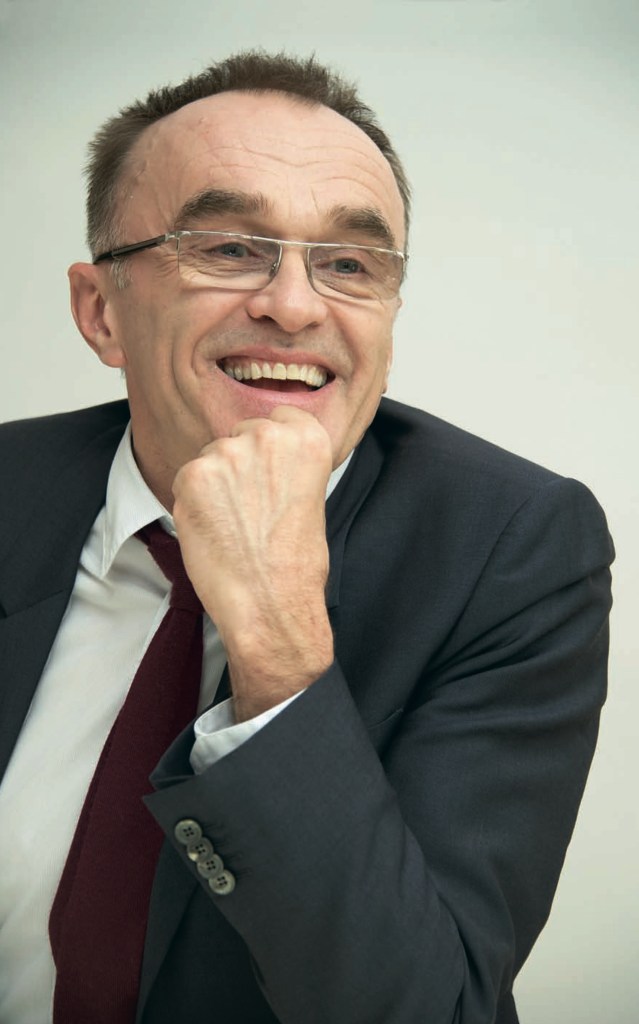
And Danny Boyle himself? True to form, he kicked off our interview before I asked a single question — a director who clearly prefers action over small talk.
Danny Boyle: Have you already spoken to Vincent? (Vincent Cassel, who plays gang leader Franck — Ed.) He’s spent quite a bit of time in Russia, hasn’t he? He’s got loads of stories — he really knows the place.
I’ve only ever flown in to present films, so I never saw much beyond hotel rooms and red carpets. But last year, when my daughter turned 21, I took her to St. Petersburg. That was something else.
The Hermitage absolutely floored me. I mean, you walk into a room and there’s a Matisse on the wall — and no one else around! No tourists crowding in, no security guards hovering. You’re just left alone with the art. That kind of intimacy… you don’t get that anywhere else. I could’ve stayed for weeks.
Kristina Moskalenko: Is that where the idea for Trance, this story of a stolen painting, first came to you?
Danny Boyle: (laughs) Possibly!
Kristina Moskalenko: Why did you choose Goya’s Witches in the Air for the film? Why steal that particular painting?
Danny Boyle: Goya was extraordinary — he pushed painting into a kind of psychological territory that was way ahead of his time. He wasn’t just capturing reality — he was drawing the subconscious. Fears, superstitions, dreams.
Witches in the Air is one of his strangest, most disturbing works. There’s a figure running with his head covered by a sheet — it’s mad, theatrical and deeply unsettling. And when I saw it, I thought: that’s Simon. That’s the character. He’s trying to run from something — from himself — but he can’t even see where he’s going.
Kristina Moskalenko: The characters in Trance — Simon, Franck, Elizabeth — they’re all successful, wealthy, polished. Why do they need to run from anything? Why steal a painting? It almost feels like… they are just bored.
Danny Boyle: When you make a film, you want it to be a kind of launchpad — a jolt into something new. A burst of energy that pushes you into another world. That jolt could come from a suitcase full of cash falling on your head, a stolen painting, or getting on Who Wants to Be a Millionaire in India.
While making a film, you open yourself to that new world. That’s what I love about cinema — as a director, you never quite know where new circumstances will take you. I come from a fairly pampered, sheltered world, and I’ve always wanted to push through its boundaries. My characters want to do something radical — something that breaks routine. Elizabeth, for example, spends her days helping people get over their fear of spiders or their obsession with golf. Of course she’s bored!
Kristina Moskalenko: So you think people in wealthy societies are subconsciously drawn to chaos and violence?
Danny Boyle: Look at the London Olympics. Just a year before the Games, we had riots across the country. London was literally burning. And then — just a year later — you had the Olympics, this massive celebration of national pride and unity. Society needs conformity to maintain order — it has to be there, or everything collapses. But even so, the freedom to express yourself must be protected, even when it makes people uncomfortable.
When punk exploded in the UK, most people thought it was disgusting. Today, punk looks almost innocent — even romantic. Because the idea of freedom always carries a kind of romanticism and idealism. I was a punk myself, actually.
Kristina Moskalenko: That’s new! I can easily imagine you with green hair. But talking about riots — in Trance Simon keeps repeating that no painting is worth a human life. Do you think anything is?
Danny Boyle: The life of another human being. That’s the only thing. If we forget that, it becomes all too easy to start burning people in furnaces again.
Kristina Moskalenko: In that sense who do you think is the hero of the 21st century?
Danny Boyle: Or heroine, rather. In Trance, the real engine of the story is a woman — though that only becomes clear over time. I’ve got two wonderful daughters in their twenties, and I still haven’t made a film where a woman is truly at the center. Can you believe that? But if we’re talking about the defining figure of the 21st century, I’m sure it’s going to be a woman.
Kristina Moskalenko: Where will she come from?
Danny Boyle: We try to look into the future, but the lens we use is shaped by the past. I think women will have the biggest impact on applied sciences. Take something simple — Samsung just released a smartphone that watches you. If you look away, it shuts off. You look again, it lights up. Look around — people are checking their phones every two seconds. Our relationship with technology is only going to deepen.
Soon, biotechnologists will turn gadgets into actual extensions of the human body. So the heroine of the 21st century won’t come from traditional realms like politics or the arts — she’ll come from that world, where tech and biology collide.
Kristina Moskalenko: So where does cinema go in that world?
Danny Boyle: These days, someone can theoretically be in a cinema watching a film and watching the exact same film on their phone — at the same time. You can’t stop people from checking Twitter every minute during a movie. We have to learn to accept that. But one thing hasn’t changed: people have always loved a good story.
Psychologically, we’re wired to seek out new narratives, new information, through any medium — TV, phones, film, or theatre. We always want more. Some say cinemas won’t survive. I hope they do. There’s something powerful about experiencing ideas collectively. That said, my view is shaped by my generation. I love going to the movies. And as a filmmaker, I try to create something that compels people to sit in a dark room with strangers — not just download and watch it whenever and wherever.
Kristina Moskalenko: You directed the London Olympics Opening Ceremony. Was that harder than making a film?
Danny Boyle: For me, film is harder. The Olympics tell the story of a nation — that kind of story will always feel timely. In cinema, you tell personal stories. And personal stories are organic — they shift constantly. I’m always working to make sure the story I’m telling doesn’t feel dated before the film is even released. That’s a real challenge in today’s filmmaking.
You might shoot a film with some cutting-edge tech, and a year later, by the time it hits screens, it’s already outdated. That’s why I’ve never made very topical films. It’s also why directors keep turning to themes like love, death, sex, fear — those are eternal.
Kristina Moskalenko: Classic Hollywood themes, yes — but you seem to approach them differently. Darker, perhaps. And still win Oscars for it.
Danny Boyle: I’ve always tried to work outside the Hollywood system. But the reality is — we’re all working within it. Even the great, low-budget indie films… no one sees them unless a studio gets behind them and distributes them.
I get that. But I try to keep my stories unexpected. With Trance, I wanted the audience to be in a constant state of uncertainty. At first, it seems like James McAvoy — who plays the auctioneer Simon — is the hero. But it’s only by the end that we see who he really is. Cassel starts out looking like a classic villain, but by the end he’s almost like a teenager — confused, unsure what to do with his emotions.
You can only show those kinds of nuances if you’re working with a smaller budget — one that allows you to challenge Hollywood norms. Hollywood thrives because people want clear-cut values. That’s fair. But it’s always satisfying to shake it up and deliver something darker than it expects.


 Articles on film, luxury lifestyle, culture and tech
Leave a comment