
By Kristina Moskalenko
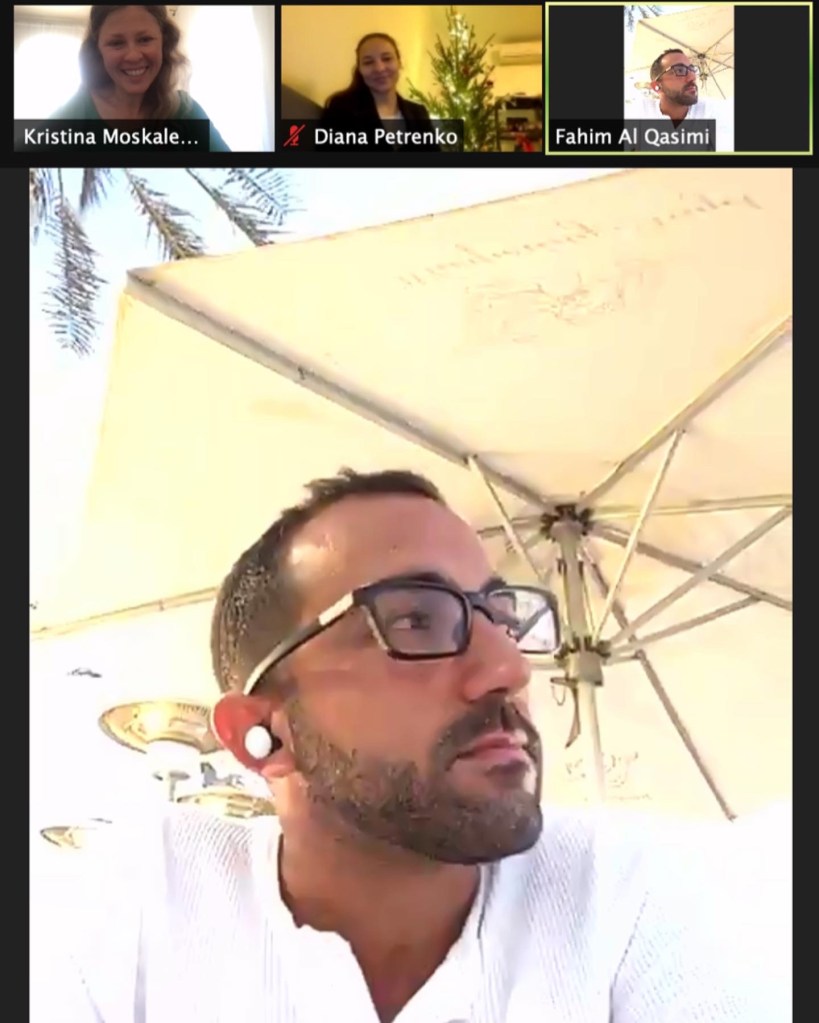
He’s on a beach in Dubai at sunset. I’m greeting the morning sun in Florida. Somehow, this Zoom call skips past the cold and grey of winter, the turbulence of global price hikes, even the remnants of the pandemic. The mood is unusually upbeat.
But then again, so is Sheikh Fahim bin Sultan bin Khalid Al Qasimi. As Chairman of the Department of Government Relations in the Emirate of Sharjah, optimism seems to be his operating system. He sees opportunity where others see obstacles, and he’s a devoted believer in the power of small actions to drive lasting change.
“I care deeply about the health of our oceans,” he says with quiet conviction. “I can’t save the ocean alone, but I do what I can.”
Ocean conservation is a complicated subject, Sheikh Fahim admits – and few people want to read gloomy scientific reports. Instead, he champions clear, beautiful success stories that connect with the public, shift behaviours, and inspire action. “Once people understand the issue, they’ll stop dumping rubbish from boats or carelessly endangering sea turtles with their vessels,” he explains.
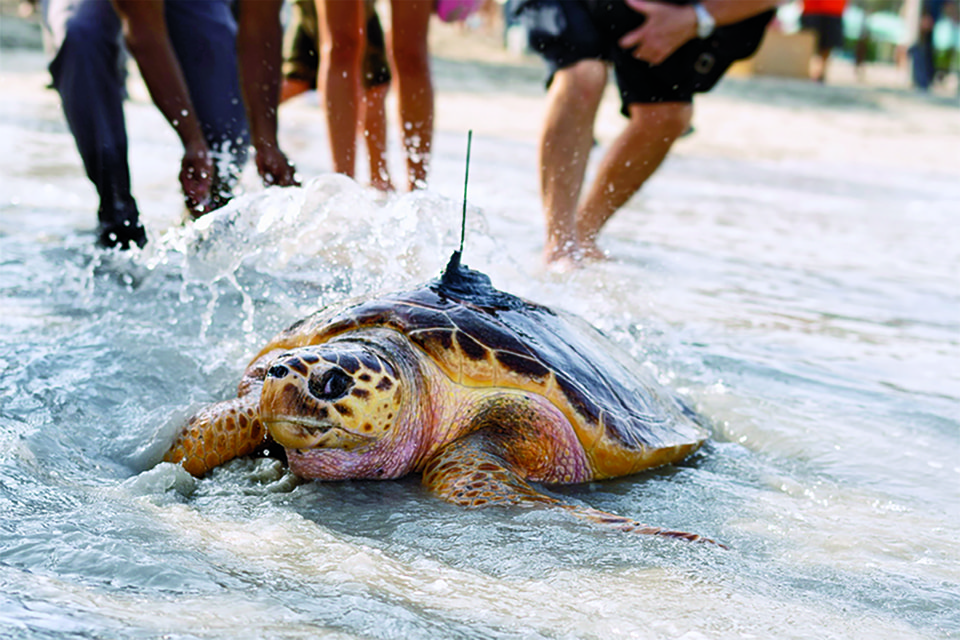
One such story is 800-Turtle, a dedicated UAE-wide helpline launched in collaboration with Jumeirah Group and other partners. “If someone finds an injured or distressed turtle, they can call the number and we’ll respond,” he says. “As a project ambassador, I’ve visited three schools just this month, speaking to children about how we rescue and rehabilitate turtles – over 2,000 since 2004.”
The Free-Diving Sheikh and His Solar-Powered Belle Epoque
The ocean has been Sheikh Fahim’s lifelong passion. “I used to skip school sometimes just to swim or dive in Fujairah,” he admits with a laugh. That boyhood escapism eventually led to a scuba license — but even now, it’s freediving that brings him the most joy.
“The UAE recently adopted a shorter workweek, so I spend my free half-day either in classrooms teaching children about the ocean or out in the water,” he says. “I’ve decided to grow old on a yacht, so I’m not interested in things I can’t take with me.”
That yacht — Belle Epoque — is no ordinary pleasure vessel. Powered entirely by solar energy, she’s something of a personal mission. “Since the start of the pandemic, my friend and I have been restoring her each morning. We swapped the engine for an electric one. I think she might be the most eco-friendly yacht in the Emirates,” he says with a grin, turning his iPhone camera to reveal the gleaming white deck and quietly humming motor.
From Blockchain to the Breakfast Table: Reinventing the Seafood Supply Chain
Beyond his role in Sharjah’s government, Sheikh Fahim is quietly shaping the future of sustainable seafood through strategic tech investments. One of his most ambitious ventures is Seafood Souq — a Dubai-based company whose name literally translates as Seafood Market, but whose mission runs far deeper.
“We’re using blockchain technology to bring full traceability to the seafood supply chain,” he explains. “Every product we source can be tracked back to its origin — the boat, the fishery, even the method used to catch it.”
The goal? To make seafood consumption not only smarter but more ethical. “We need to learn to choose better, eat more consciously, and fish more transparently,” he says. “Technology makes that possible.”
As for other buzzy tech trends, Sheikh Fahim remains refreshingly grounded. “NFTs? Bitcoin? I’d rather read a book to my children,” he smiles. “In the end, everything I do is for them — for the next generation.”
Thinking in 30-Year Cycles: A Father, a Futurist, a Cultural Bridge
Sheikh Fahim speaks about the next generation not with concern, but with compassion. “I grew up in a multicultural world and studied at Cambridge, so I understand just how fast everything is changing,” he says. “When the 2008 financial crisis hit, I was already working. But younger people watched their parents lose jobs, watched them survive. It made them question the system: Why should I follow this path? That’s where today’s different expectations come from.”
When it came time to choose a school for his own children, the reality hit hard. “They’ll enter the job market in 2036. How can we possibly know what the world will look like then?” he says. Seeking guidance, he called his mother — a German businesswoman who, in the 1970s, brought the first German tourists to the UAE. “She told me, back then, just getting your children into any school was an achievement. She didn’t think in 30-year increments.”
Sheikh Fahim did — and still does. It’s how he was trained in government. “Our leaders expect civil servants to make decisions with a 20–30-year view,” he says. That mindset, along with radical openness, is what he credits for the UAE’s dramatic rise.
In Sharjah, that openness is taking shape as a cultural policy. “Over the next two decades, we’re building a society that embraces global culture,” he says. Fluent in five languages, with a surprising love for Russian theatre (he once played Uncle Vanya at school), Sheikh Fahim is now overseeing the creation of a Russian language institute in Sharjah. “We want to give our community tools to immerse themselves in other cultures. To become a meeting place for the world.”
Originally published at: https://www.vedomosti.ru/kp/humans/article/2022/02/15/909328-pogruzhenie-v-kulturu#/galleries/140737489141200/normal/1
 Articles on film, luxury lifestyle, culture and tech
Leave a comment