
Interview By Kristina Moskalenko
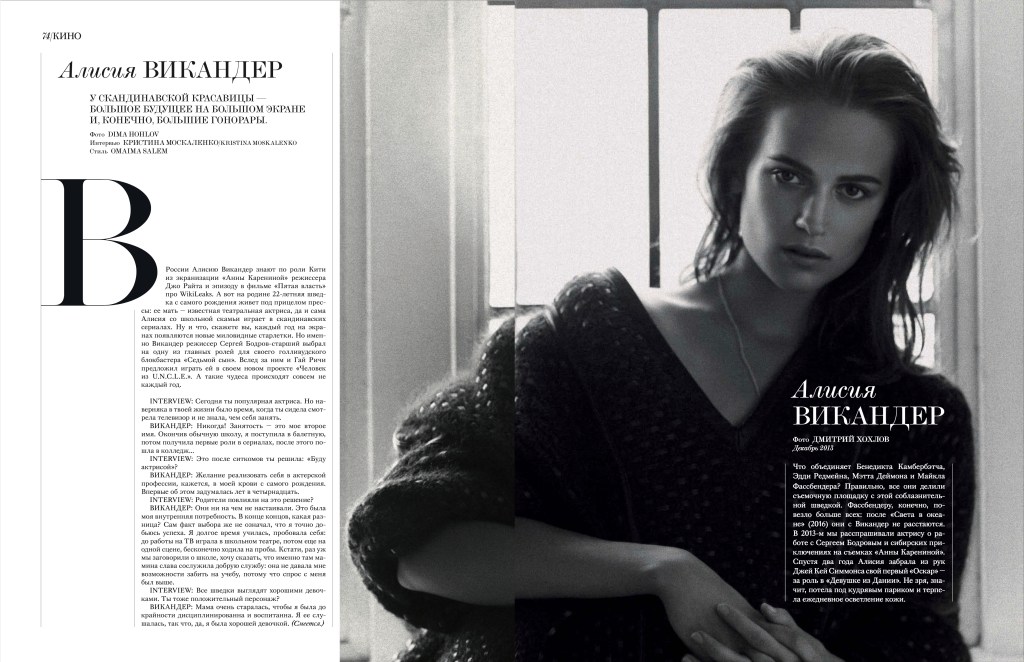
At 22, Alicia Vikander already has the kind of cinematic presence directors dream about. The Swedish actress grew up steeped in the performing arts—her mother is a celebrated theater actress, and Alicia herself has been appearing in Scandinavian television dramas since her school days.
Every year, new starlets emerge from film schools and fashion spreads, but Vikander isn’t just another pretty face with a résumé. There’s a grounded intensity to her work—and Hollywood has taken note.
Celebrated filmmaker Sergei Bodrov Sr. cast her in a lead role for his fantasy epic The Seventh Son, a sweeping Hollywood blockbuster. Soon after, Guy Ritchie brought her on board for his slick espionage reboot The Man from U.N.C.L.E.. For a young actress from Gothenburg, it’s a leap into the big league—and she’s making it look effortless.
With her poised elegance and razor-sharp talent, Alicia Vikander is quietly—and confidently—cementing her place among cinema’s next generation of leading women.
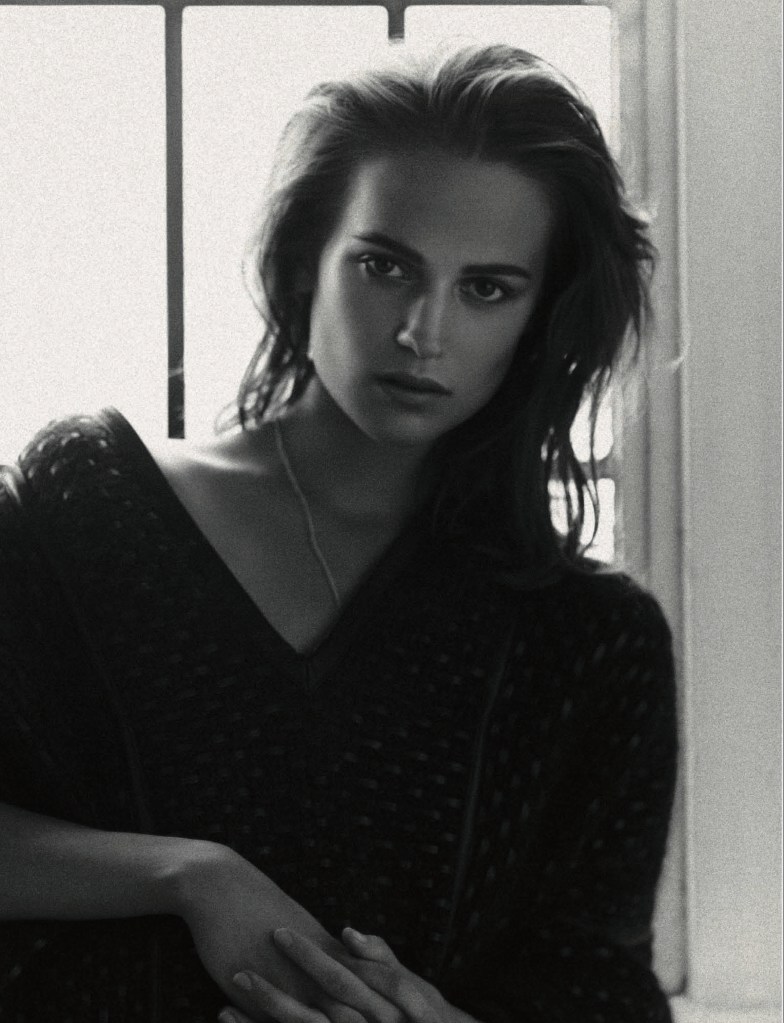
KRISTINA MOSKALENKO: Do you remember the last time you were bored?
ALICIA VIKANDER: Never! Being busy is basically my middle name. I went to a regular school, then transferred to a ballet academy, then landed my first roles in TV series… and after that, college.
KRISTINA MOSKALENKO: So when did you realize acting was it for you?
ALICIA VIKANDER: I think that desire was in my blood from the beginning. I first seriously thought about acting when I was around fourteen.
KRISTINA MOSKALENKO: Your mother’s a stage actress. Did that influence your decision?
ALICIA VIKANDER: She definitely inspired me, but she never pushed me. I think she was very aware of how tough this industry can be. She let me find my own way. That said, there were always expectations—I couldn’t coast through school unnoticed. People assumed I’d have it together, so I had to.
KRISTINA MOSKALENKO: There’s this stereotype about Swedish girls always being so proper and poised. Were you one of the “good girls”?
ALICIA VIKANDER: I was. My mum raised me to be disciplined and polite. I followed rules, studied hard… but I wasn’t made of glass. (Laughs.) Now I’m 22 and living in America, so I suppose I’m allowed to be a little wild now and then.
KRISTINA MOSKALENKO: No rebellious teenage romances?
ALICIA VIKANDER: Oh, I had crushes. I tried to dress nicely to get boys’ attention, of course. But then I shifted gears and got serious about work. It felt more rewarding than anything else. End of story. (Laughs.)
KRISTINA MOSKALENKO: You started living independently early. Do you see that as a blessing or a challenge?

ALICIA VIKANDER: Both, I think. It was intense, but I learned quickly how to take care of myself. That gave me a real sense of control over my life, which I’ve come to value more and more as I get older.
KRISTINA MOSKALENKO: What would you say to young dancers—or any teenagers—who feel overwhelmed balancing ambition and expectations?
ALICIA VIKANDER: I’m not the best at giving advice, but I’d say this: ballet gave me structure, but it’s not something I’d necessarily want for my own kids. (Smiles.)
KRISTINA MOSKALENKO: Let’s talk about film. You worked with Sergei Bodrov on The Seventh Son. What stood out to you about Russian cinema?
ALICIA VIKANDER: There’s an emotional depth to it that really stays with you. It’s unapologetically human—raw, in a way. Sergei is a wonderful storyteller. He’s promised to show me old Moscow when we go for the premiere next year. I’ve never been, and I’m genuinely curious to see it through his lens.
KRISTINA MOSKALENKO: Tell me about working with Sergei Bodrov.
ALICIA VIKANDER: I adore him. He’s like this wise old sage with such a strong moral compass—but also so warm, so open. We got along right away. During filming, we’d grab a glass of wine and just talk for hours. It never felt like work.
KRISTINA MOSKALENKO: In The Seventh Son, nearly every character has a supernatural gift. If you could choose one for yourself, what would it be?
ALICIA VIKANDER: Flying. No question. Imagine—jump up in Stockholm, land in London.
KRISTINA MOSKALENKO: Do you have a favorite film? What last made you laugh—or cry?
ALICIA VIKANDER: I love Michael Haneke’s work—Amour, The Piano Teacher. I’m also a fan of Lars von Trier. And then there’s Woody Allen. His films are like a comfort blanket—I can rewatch them endlessly. They always make me smile.
KRISTINA MOSKALENKO: What’s the hardest part of acting for you right now?
ALICIA VIKANDER: There are a lot of challenges. Figuring out a character’s psychology. Acting in a new language. Standing your ground next to people who’ve been doing this for decades. Even just staying present in front of the camera without freezing up—it’s a mental game. In Bodrov’s film, there’s a lot of humor, but my job is to make it feel effortless. The audience shouldn’t sense the takes, the sweat, or the second-guessing behind a single laugh.
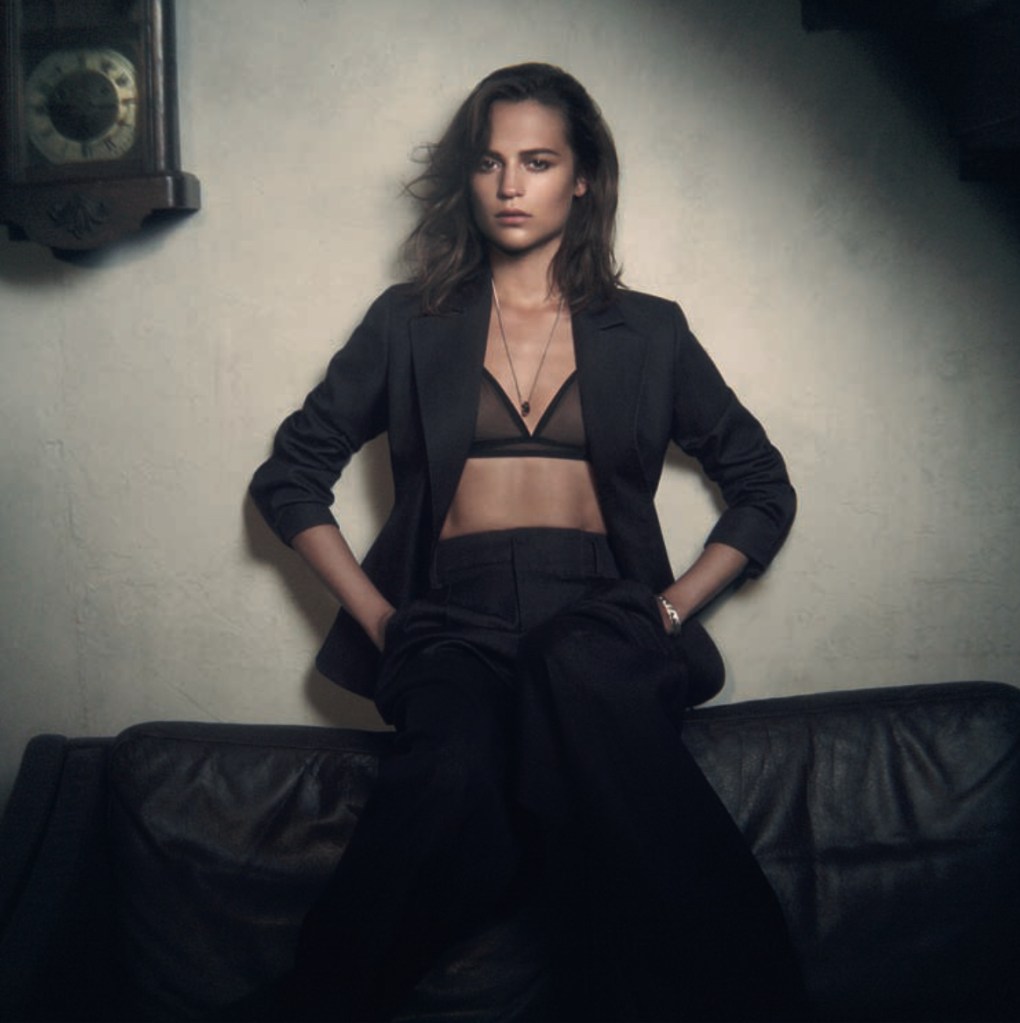
KRISTINA MOSKALENKO: What does your mom think about your career? Is she a tough critic?
ALICIA VIKANDER: The best kind. She’s honest to the core—but it’s never cruel. She’s my mother, and she also understands the work. My dad’s the same. He’ll tell me straight if something doesn’t land. He’s a psychiatrist.
KRISTINA MOSKALENKO: Do your parents have a favourite role of yours?
ALICIA VIKANDER: My mom watched Hotell recently and called me right after. She said, “Alicia, that’s your best performance yet.” She’s not one to hand out compliments lightly, so that meant a lot.
KRISTINA MOSKALENKO: Do you care what journalists write about you?
ALICIA VIKANDER: I try not to—but let’s be honest, it’s hard to ignore completely. Once, I clicked on an article about me, and not a single sentence was accurate. It’s become part of the industry—crafting a narrative out of thin air and watching it spread like wildfire. No one checks if it’s true.
KRISTINA MOSKALENKO: What kind of music makes you want to dance?
ALICIA VIKANDER: I like mixing genres—pop, electronic, a bit of classical. But I have this weird thing: I can’t dance to music with lyrics. The words distract me.
KRISTINA MOSKALENKO: I want to talk about Anna Karenina—you played Kitty, Levin’s wife, in Joe Wright’s film. I heard you read the novel when you were sixteen. What did you feel then?
ALICIA VIKANDER: My first thought, honestly? Wow, this book is massive. (Laughs.) But when I read it at sixteen, I connected with Kitty. She felt closer to who I was then. When I reread it as an adult, I saw Anna through a completely different lens. There was something deeply familiar in her restlessness.
KRISTINA MOSKALENKO: That’s fascinating—Keira Knightley said the same thing. She read it twice too and had a total shift in perspective. Besides Tolstoy, is there other Russian literature you love?
ALICIA VIKANDER: My mom used to perform in Dostoevsky plays, so I grew up watching them. I think he might be my favorite Russian writer. I like to read local authors before I travel to a new country—it helps me understand the place on a different level.
KRISTINA MOSKALENKO: How do you see Kitty now?
ALICIA VIKANDER: She was a girl, really—navigating love with all the confusion that comes with youth. Now I can tell the difference between infatuation and real love. I still believe in it, by the way. And I want a relationship built on equality. That’s a very Swedish thing.
KRISTINA MOSKALENKO: What was your first impression of Russia?
ALICIA VIKANDER: “God, it’s freezing here.” (Laughs.) I’ve been to St. Petersburg and even shot in Siberia. We stayed in this little wooden cabin, surrounded by wolves howling at night. I remember thinking, Why am I here? Why did we come all this way for a 30-second scene? It was wild—and kind of beautiful, in a terrifying way.
KRISTINA MOSKALENKO: That’s incredible.
ALICIA VIKANDER: I know, right? After that shoot in the middle of nowhere, someone handed me eight boiled eggs—and I swear, they tasted like food of the gods.
KRISTINA MOSKALENKO: Did they offer you vodka and salo, too?
ALICIA VIKANDER: Of course! I’ve actually loved cooking ever since college. We lived in this massive dorm, like one big extended family. And when fifteen hungry people want real, home-cooked food, someone has to step up. I became the unofficial house chef.
KRISTINA MOSKALENKO: Do you still keep in touch with your Swedish friends?
ALICIA VIKANDER: Absolutely. Funnily enough, I see them more often in places like Paris, Los Angeles, or London than back home. They’re just as restless and curious as I am—we’re all constantly on the move.
KRISTINA MOSKALENKO: Do you love fashion?
ALICIA VIKANDER: Like any girl, sure. One of the perks of this job is getting to wear insanely beautiful gowns. You put one on and suddenly you’re a queen, or a duchess, or a Russian aristocrat like Kitty. But off set? I’m a jeans-and-sneakers kind of girl. I love black, clean silhouettes. I tend to experiment more with textures than color. But really, the key for me is not the outfit—it’s feeling comfortable in my own skin.
Styling OMAIMA SALEM
Photography DIMA HOHLOV
Makeup by Ariel Yeh.
Hair by Panos Papandrianos / CLM.
Photographer’s assistant: Guillaume Blondiau.
Stylist’s assistant: Fiona Hicks.

 Articles on film, luxury lifestyle, culture and tech
Leave a comment