
By Kristina Moskalenko
Look out for Pullman carriages — fewer than 100 remain worldwide
It all began when American inventor George Mortimer Pullman took a short train ride from Buffalo to Westfield, New York — just 100 kilometres. The experience was anything but refined: lying by candlelight on a rough mattress in a wooden wagon, Pullman found the journey so uncomfortable that instead of sleeping, he began sketching what would become the world’s first luxury sleeper carriage.
When he attempted production in Chicago in 1863, the initial design failed — the carriage was too wide for standard tracks. But his second iteration arrived at just the right time. In 1865, one of Pullman’s cars was chosen for President Abraham Lincoln’s funeral procession, ushering in a new era of elegance in rail travel.
By 1867, the so-called golden age of train travel had begun — and it was George Pullman who turned the railway carriage from mere transport into a destination in itself. Think gourmet meals served onboard, crystal chandeliers, silk lampshades, and leather armchairs. It wasn’t just lavish materials that set the Pullman experience apart, but genuine innovation: proper sleeping berths, high ceilings, oversized windows, electricity, air conditioning, underfloor heating, and cleverly designed foldaway upper bunks.
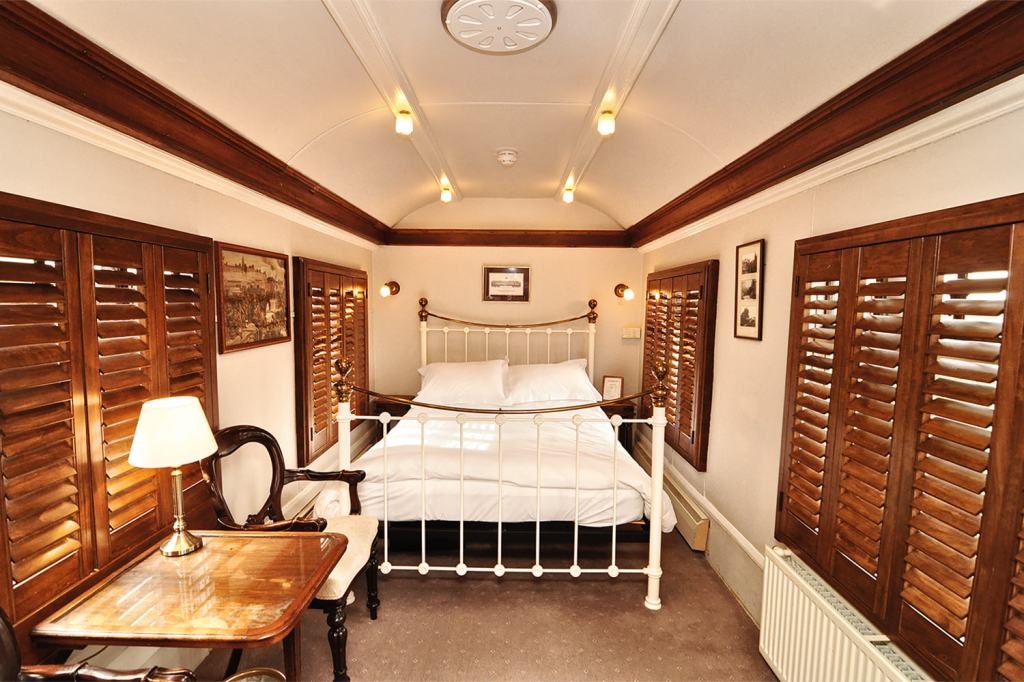
By 1887, Pullman carriages had reached the height of refinement — with high-backed seats, French upholstery, rich carpeting, mahogany paneling, stained glass details, private compartments, observation lounges, dining cars, and even dressing rooms. Most importantly, they featured the first safe corridor connections between cars, allowing passengers to move freely. These trains weren’t just five-star hotels on wheels — they became the backdrops for films, the setting for novels and whodunnits, and icons of luxury travel that spanned countries and continents.
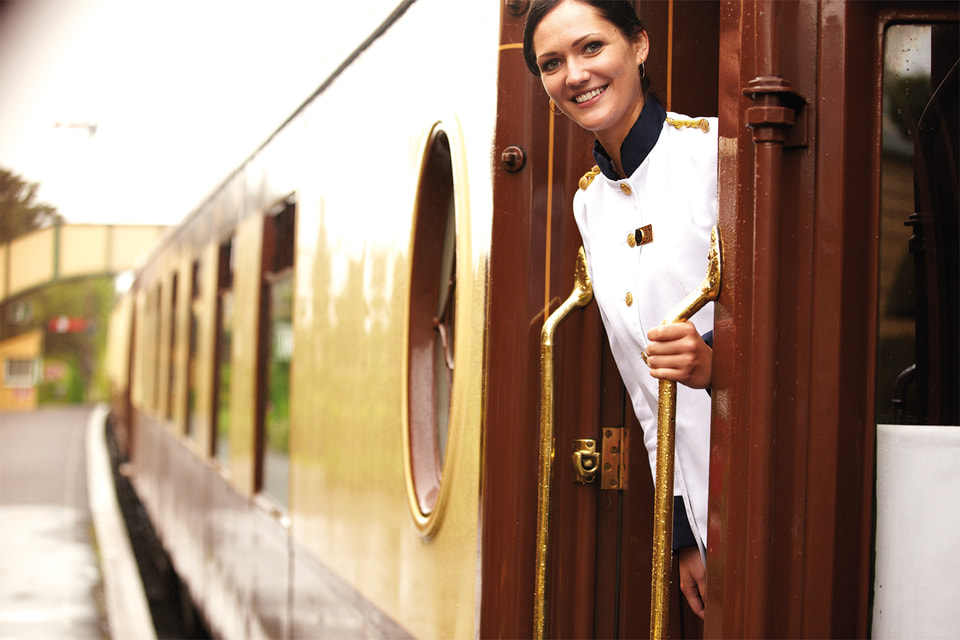
Many of Pullman’s original innovations remain standard in modern first-class rail travel. But when it comes to travelling in true style, there’s little room for compromise — no train matches the grandeur of a Pullman. Although production ceased after the Second World War, their legacy remains unrivalled.
The fate of surviving Pullman carriages has been varied. Some were destroyed during the war; others were simply abandoned to the elements. All were officially retired by 1961. When a handful of railway enthusiasts began salvaging what was left of this rolling opulence, they discovered that only around 100 Pullman cars remained worldwide. Remarkably, many were still operational — and with careful restoration, they found new life either as heritage travel experiences or as reimagined luxury spaces.
Four such carriages are now preserved at Petworth railway station in the UK: Alicante (1912), Mimosa (1914), Flora and Montana (both 1923). True to Pullman tradition — much like hurricanes — each carriage had a name. Flora and Montana, for instance, once carried passengers in style between London and Paris. The station itself was built in 1892 to serve a rather select passenger: the Prince of Wales, Queen Victoria’s eldest son, later crowned Edward VII. Just nearby, at West Dean House, lived his close friend Sir Edward James. His wife, Evelyn Elizabeth Forbes, was considered a kind of Lady Annabel Goldsmith of her day — famed for hosting dazzling society soirées.

Just a few miles from their estate lies one of Britain’s most picturesque racecourses — Goodwood. The future monarch, a devoted fan of both grand receptions and the races, was a frequent visitor. As a result, Petworth station was built with royal convenience in mind — and it shows. Unlike the utilitarian brick stations common across the country, this one was designed with refinement in every detail: rare hardwoods instead of brownstone, classical proportions in place of boxy structures, tall sash windows, and upholstered sofas in the waiting rooms. It feels far closer to a country house drawing room than a standard railway platform — a fitting gateway for a king in waiting.
Trains continued to stop at Petworth until 1955, but statistics told a quiet truth: the station served just one passenger per week. It was eventually closed and left dormant — until 1980, when the building was converted into a private residence, and later, in 1995, into a hotel. By the time current owner Gudmund Olafsson acquired the property in 2005, three Pullman carriages were already on site. He located a fourth — Montana, in Cambridge — and began a meticulous restoration of both the timbered station and all four carriages. Each was transformed into a luxury suite, with interiors carefully preserved to retain the “colonial spirit” of the era in which they were built.
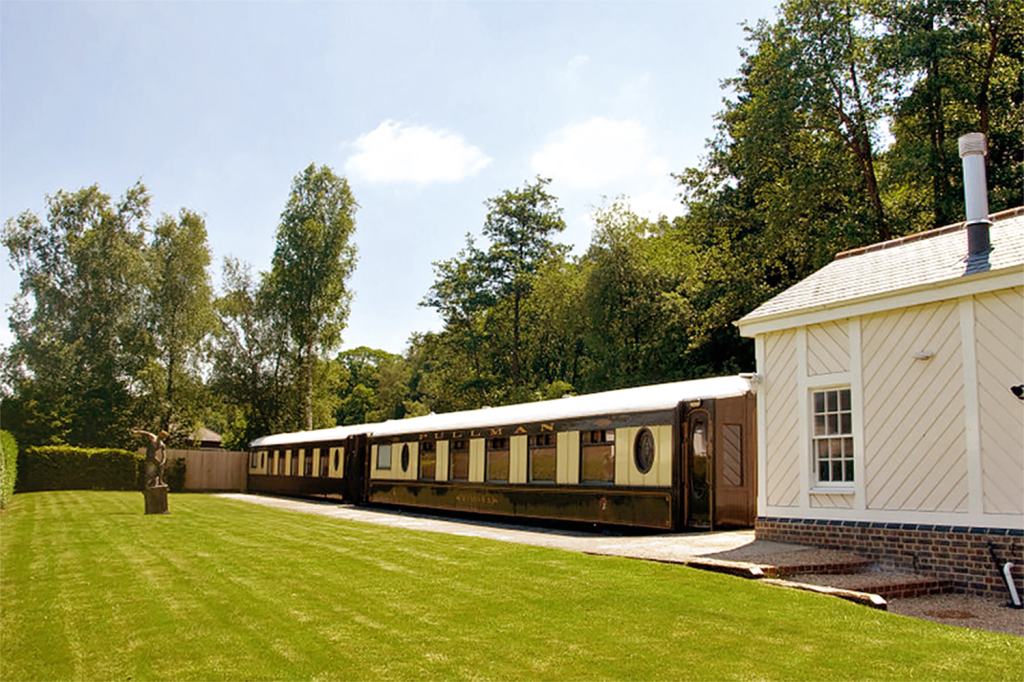
Today, The Old Railway Station is the only place in the UK where guests can spend the night in an original Pullman carriage — on a royal platform no less. The hotel holds a four-star rating, has been inducted into TripAdvisor’s Hall of Fame, and this year was named “Britain’s Most Romantic Hotel” by The Good Hotel Guide.
With only around a hundred Pullman carriages left in the world — and four of them here — we have every reason to be proud,” says Gudmund Olafsson. “I see myself more as a custodian than an owner. This remarkable heritage demands constant care and time. For instance, the carriages were designed to stay in motion — and when they sit still, water tends to collect in hidden places that would otherwise dry out naturally. The wood used to build the station and the cars is incredibly rare and costly. They’re all around a century old. You can imagine the effort my wife and I put into this place. But from the moment I saw it, I fell in love — and everything I do here comes from that love.”
The Old Railway Station remains a deeply personal, family-run retreat with just ten rooms, a small bar, a crackling fireplace, and a library. The nearest town, Chichester, is 15 kilometres away, and the hotel is only accessible by car. In the surrounding countryside are two exceptional stately homes turned museums: Petworth House and Uppark House. Call the hotel directly and there’s every chance Gudmund himself will answer the phone.
Elsewhere in the UK, eleven more restored Pullman carriages from the 1920s, ’30s, and ’50s have been gathered by Belmond — formerly the Orient Express Group. Known for its portfolio of luxury hotels, trains, and river cruises, the company restored these vintage coaches to their original grandeur and launched the Belmond British Pullman. More than just a journey, this train offers fully immersive experiences — including the Murder Mystery Lunch, a theatrical afternoon of fine dining and suspense, staged in motion aboard carriages that once defined the golden age of travel.
The appeal of the Belmond British Pullman isn’t just the scenery — though stops include charming destinations such as Whitstable, the oyster capital of Britain — but the drama unfolding onboard. During the five-hour journey, guests are swept into a live performance of Agatha Christie’s legendary Murder on the Orient Express.
A body is “discovered” mid-journey. A murderer is hidden among the passengers. Clues are discreetly planted throughout the carriages, and by dessert, guests are invited to piece together the mystery. It’s a fully immersive experience — a five-course lunch served alongside a live whodunnit, staged by professional actors, within the plush interiors of authentic 1920s and ’30s Pullman carriages.
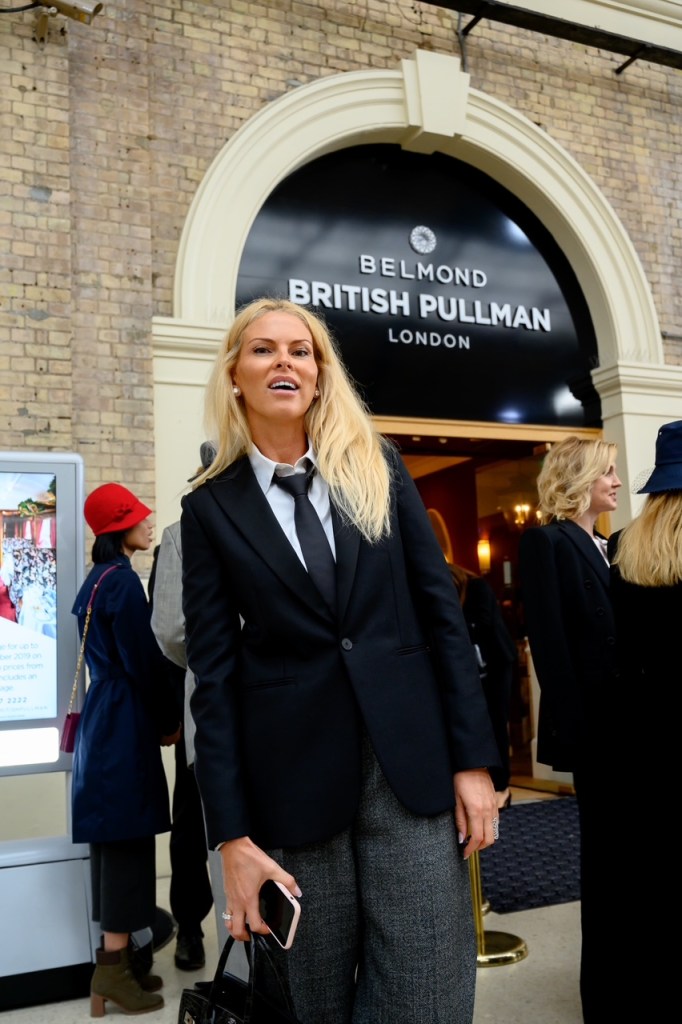
“This year marks the 125th anniversary of Agatha Christie’s birth,” says Gary Franklin, Vice President of Trains and Cruises at Belmond. “So every journey feels like a celebration.” Guests often embrace the glamour of the era, arriving at London’s Victoria Station in 1920s and ’30s attire — cloche hats, tea dresses, brooches, envelope clutches, elbow gloves. It’s an elegant time warp: Pullman panelling, murder mystery theatre, vintage fashion, and a five-course menu — often designed by some of Britain’s top chefs using the finest local produce, all paired with sommelier-selected wines.

When the weather allows, the train is pulled by a gleaming steam locomotive, adding another layer of historical romance. “I’ve taken this journey many times with friends and family,” says Franklin. “And of all the heritage routes Belmond offers, this one is my favourite. In just five hours, you get a perfect snapshot of Britain: a scenic journey, a themed stop with guided excursions, immersion in the golden age of rail, a five-course lunch with wine and Champagne, and a full Agatha Christie murder mystery — all shared with those you love.”
This year’s guest chef lineup for the Belmond British Pullman is equally starry. James Martin, BBC’s Saturday Kitchen host, and Michelin-starred Tom Kerridge have already crafted exclusive menus. In October, royal favourite Anton Mosimann — long trusted by the British royal family — will take over the dining carriage. And during the festive season, the train transforms for Christmas lunches and candlelit dinners, with one highlight being a special service curated by celebrated chef Raymond Blanc.
Originally published at: https://www.vedomosti.ru/kp/deluxe/article/2019/01/29/792718-poiti-po-vagonam
 Articles on film, luxury lifestyle, culture and tech
Leave a comment