
By Kristina Moskalenko
Compilations of hits from beloved musicians and composers are a staple of the music industry. In fashion, however, “hit” collections take a decidedly more opulent form. Far from mass-market releases, they are typically produced as hefty, luxurious volumes designed for true aficionados — the kind of coffee table books that guests can leaf through while the hosts prepare or pour drinks.
Among the latest in this genre is a book on the Sportmax brand, published by Assouline. It brings together fabric swatches, pattern designs, and visually celebrated advertising campaigns, alongside reflections on the label’s fifty-year history, offering both collectors and enthusiasts a richly detailed portrait of the house.

“My grandfather, Achille Maramotti, approached work with remarkable rigor, care, and passion,” begins Maria Giulia Precozzi Maramotti, granddaughter of the founder of Max Mara and Sportmax and director of sales for the Max Mara group. “At the same time, he was a warm, delightful man who loved life, valued community, and cherished family. He was always elegant and constantly smoked Tuscan cigars — a scent I forever associate with him.” (How to Spend It met with her in London shortly before a private presentation of the book to fashion connoisseurs and industry professionals.)
In addition to the anniversary book celebrating the brand’s 50-year history, a capsule collection of 15 pieces was released, interpreting the house’s signature codes. The collection includes coats, trench coats, caps, sweaters, dresses, skirts, jackets, as well as shoes, a bag, and sunglasses. All items are rendered in the bold primary colours that have defined the brand since its inception: deep green, red, and blue.
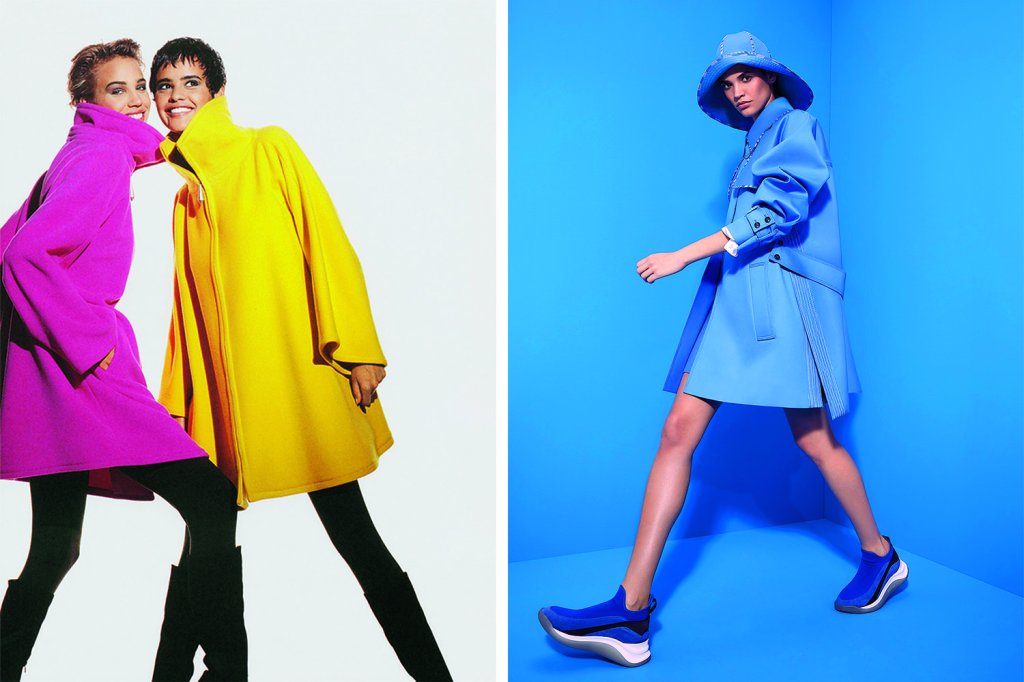
The collection is particularly compelling for its reinterpretation of 1970s fashion and a special cut developed at the time, allowing for deconstructed garments without linings. Sportmax’s emphasis on well-cut pieces made from high-quality fabrics traces directly back to its parent company, Max Mara, which once bridged the world of couture houses and the emerging post-war ready-to-wear movement. Achille Maramotti believed that every woman deserved a good wardrobe without spending a fortune; he was among the first — and arguably the first in Italy — to introduce a range of sizes and shapes suitable for most female figures.
Success was immediate. By the 1960s, with the baby-boomer generation coming of age, Maramotti sought to infuse his concept with energy and individuality — qualities that would become the defining codes of Sportmax, Max Mara’s sister company.
“We don’t aim to make trend-led pieces that everyone wants right now,” says Maria Giulia. “People come to us for coats with a specific cut, for pieces that will settle into their lives and become part of their identity. When I wear a Sportmax coat myself, I am constantly stopped on the street, showered with compliments, and asked where it’s from. Many of those who ask then go and buy one. And here’s the subtle point: when a brand produces items that are too obvious or recognisable, there’s no reason to ask. But with us — they ask! Do you see the difference? We believe brand identity is not always about recognisability. Identity can mean that a customer knows when they seek a particular piece of a certain quality from this brand, they will always find it there.”
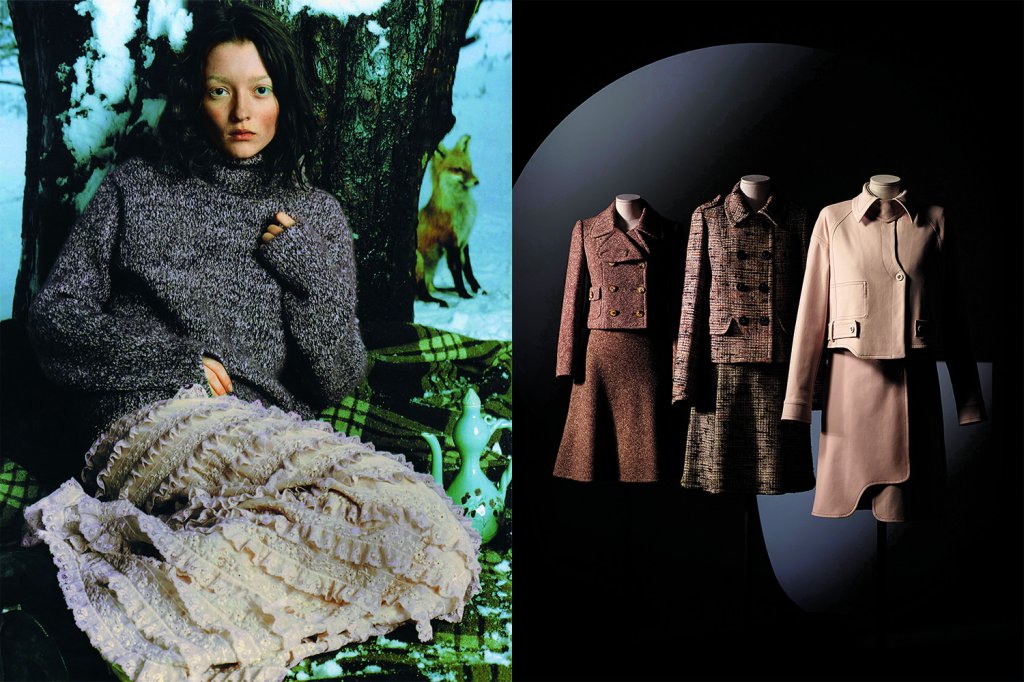
The aim of the book is not merely to recount that Sportmax was conceived to dress the younger sister of the elegant Max Mara client, but to show how, over 50 years, Sportmax designers have reflected societal change and inscribed the brand into both Italian and global fashion history. It also serves as a reminder that the house, with its carefully curated mix-and-match pieces, pioneered the concept of the total look.
The chronologically structured essays tracing Sportmax’s history were written by influential fashion journalist Luke Leitch, former deputy fashion editor at The Telegraph. The book was edited by Olivier Saillard, director of Paris’s Musée Galliera from 2010 to 2018 and recognised by Business of Fashion as one of the leading fashion critics and curators, under whose direction exhibitions have been staged at the Musée Bourdelle in Paris and the Victoria & Albert Museum in London.
Speaking of London, it was the city’s swinging 1960s mini-skirts that inspired Achille Maramotti in 1969 to create Sportmax — for the young yet discerning woman. “The ‘Sport’ in Sportmax doesn’t mean my grandfather intended it as gym wear,” explains Maria Giulia. “For him, sports were cricket and horse racing. That’s why early collections drew on elements from those types of athletic clothing. That’s what ‘sport’ in the name really signifies.”
The book’s imagery ranges from fashion sketches and archival pieces to photographs of advertising campaigns spanning 50 years. Renowned photographers contributed, from Sarah Moon and Peter Lindbergh to the duo Inez & Vinoodh and David Sims, whose image of model Kiki Willems in Sportmax was chosen for the cover. The sense of dynamism and movement in the photograph perfectly embodies the ethos of Sportmax from its inception.
“For 50 years, Sportmax has transformed the everyday with the poetry of practicality,” writes Leitch. “Its verses are adorned with quotidian life, repeated wherever women wish to eschew ostentation in favour of enduring style. Suits form its alphabet; jackets and trenches its rhyme; necklines, pleats, and dresses its sonnets; colour, leather, and fabric combinations its punctuation. Sportmax is not just a high-end fashion house, but a complete language.”
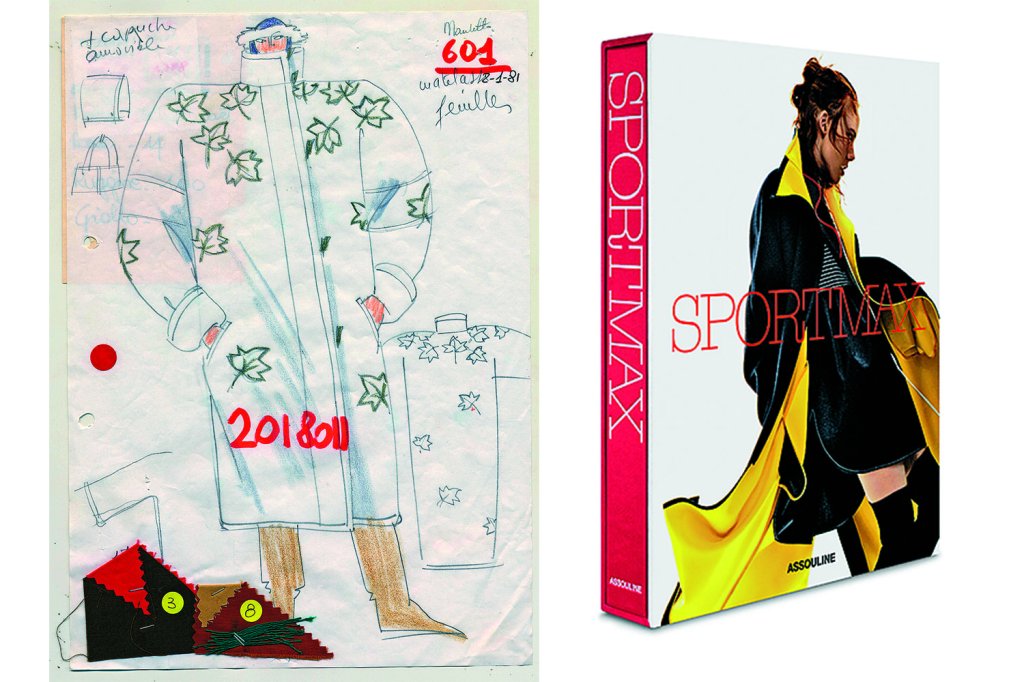
It is precisely for this reason, Maria Giulia admits, that she does not chase trends. “Naturally, over 50 years the brand has built both heritage and expertise,” she stresses. “When everyone is obsessed with street style, and you have spent five decades perfecting cut and garment construction, it’s worth acknowledging that streetwear is not necessarily your strongest suit. That said, a good designer can always draw inspiration from trends and deploy them skillfully. While working on the book and exploring the archives, I was continually struck by how the brand interprets contemporary events through clothing. Sportmax engages with long-lasting fashion movements — not seasonal fads — such as ethnic influences and the hippie style, themselves shaped by Indian culture. The brand has not only captured these trends for posterity but has interpreted them in a deeply personal, intimate way. Working on the book reminded me just how avant-garde the label can be.”
Sportmax remains a family-run brand, untouched by corporate ownership. Maria Giulia herself serves as the brand ambassador and resists leveraging the work of famous artists purely to boost sales. “In a family business, your family’s values permeate the work,” she reflects. “There are pros and cons, but I know this is how authenticity is achieved. It’s not because we set out to create an ‘authentic’ brand or chose it as a concept — it happens organically, and it becomes inevitable.”
Originally Published at: https://www.vedomosti.ru/kp/deluxe/article/2020/03/05/824574-strogo-po-starshinstvu
 Articles on film, luxury lifestyle, culture and tech
Leave a comment