
By Kristina Moskalenko
The groundbreaking play Burning Doors by Petr Pavlensky and Oleg Sentsov just wrapped its powerful run at London’s Soho Theatre. Centered on civic activism and the fearless story of Pussy Riot, this must-see production continues its UK tour across other major cities throughout October. A bold collaboration between the Belarus Free Theatre and Pussy Riot’s Maria Alekhina, Burning Doors dives deep into activism, resilience, and the role of art under oppression. We sat down with Maria Alekhina to uncover the shocking scenes—like why she’s drowned in a bathtub, how childbirth unfolds in detention, and what daily life is really like inside the Calais refugee camp—and how all these raw realities fuel the power of theatre today.
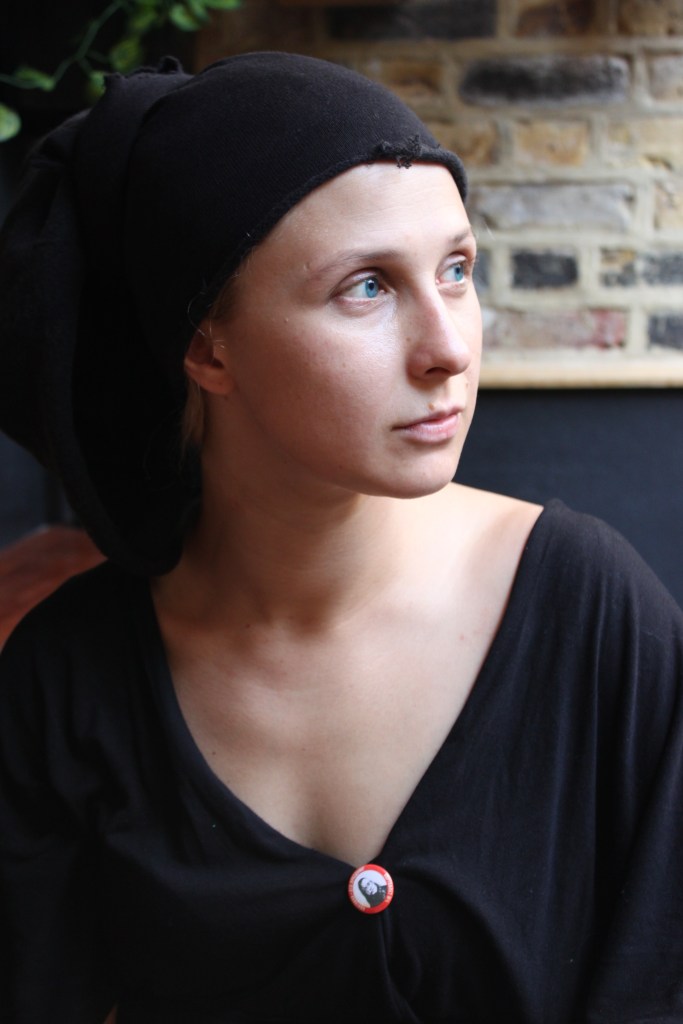
Kristina Moskalenko: Maria, who came up with the idea for the joint play and how?
Maria Alekhina: We got to know the theatre back in 2014 when Pussy Riot first came to London. A year ago, when we were performing at Glastonbury, I learned that Belarus Free Theatre was also doing a festival — Staging a Revolution at Young Vic. Then I wrote to them saying I wanted to do a joint project because essentially we are doing the same thing. And in January 2016, they invited me on a trip to the refugee camp in Calais, where their friends — Good Chance Calais — were working, the guys who built a theatre in the camp.
Kristina Moskalenko: What was it like in the camp?
Maria Alekhina: Paradoxically, after talking with the refugees, I realized these people are stronger and believe in European values more than many I met in Europe. In the camp, I met doctors, engineers; they installed electricity themselves and organized schools. What struck me was that in Calais itself nothing happens: there are three pubs open until eleven, one empty hotel with flowers painted on the walls, empty factories, empty houses fenced off with signs warning about vicious dogs. Meanwhile, the camp is a truly living place. We held an event with children — standing by the wall, outlining their silhouettes, and they drew their wishes inside them. One boy drew a guitar, and we decided to find him a guitar. And I’ll tell you — finding a guitar in Calais, where there are music shops but all are closed, was difficult. It feels like the town has everything but in reality, it doesn’t exist. I had this feeling when I first came to Europe after prison — everything seems fine, but the meaning is gone somewhere. In that camp, we finally decided to make a play about the relationship between the artist and power.
Kristina Moskalenko: How would you describe this relationship?
Maria Alekhina: By its nature, power always creates boundaries, and the artist comprehends, provokes, and expands them. It’s always confrontation. Without confrontation, stagnation begins.
Kristina Moskalenko: Who wrote the script for the play?
Maria Alekhina: Belarus Free Theatre is a devised theatre where everyone tells their own story, and the director connects them. The theatre’s very first play, 4.48 Psychosis, was staged based on Sarah Kane’s play, but most subsequent productions were created by the etude method: information is collected, which the group then works with to feel it deeply and transform it into images. That is, a series of etudes is staged on a given theme. One of those themes was exploring the limits of the body.
Kristina Moskalenko: Bodies? What’s the connection between the state, the artist, and the body?
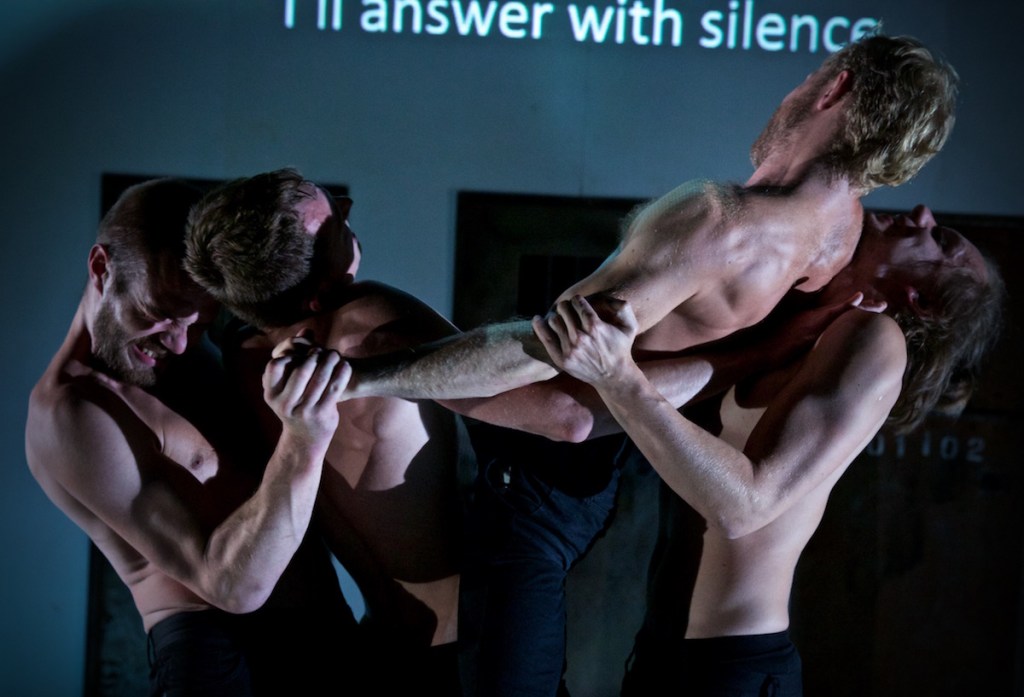
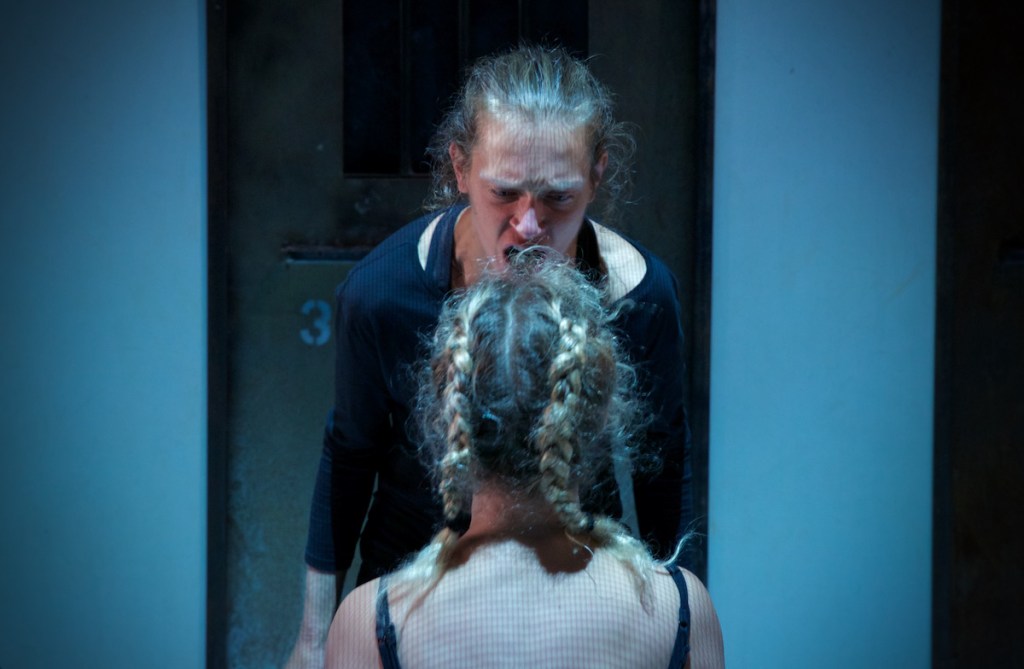
Maria Alekhina: The story of Oleg Sentsov, one of the play’s heroes, is remarkable because he survived torture. How do you portray torture on stage? You have to push yourself to the limit. That’s how the scene was born where actors spend ten intense minutes pushing each other to physical extremes—torturing each other. After the premiere, one actor confessed that during the struggle he felt ready to betray his homeland, realizing he couldn’t take it anymore. That’s the point—to reach the moment when, as a human, you feel you can’t go any further. Then, the challenge is to push beyond that limit. The meaning is to go further.
Kristina Moskalenko: There’s a scene where you’re drowned in a bathtub. Is that also about overcoming?
Maria Alekhina: Yes, but it’s also about proving you’re alive. For the first ten performances, I was pulled out of that bathtub. Then I realized I wasn’t a victim—I had to fight and work through the fear. When they grab your hair and start drowning you, it’s terrifying—because it’s instinctual. Your body doesn’t understand it’s theatre. Even if your mind knows what’s happening, your body reacts on its own. But over time, the body learns.
Kristina Moskalenko: How did that happen?
Maria Alekhina: We rehearsed for a month at Falmouth University, living in a dorm. Our two Irish neighbors drove everyone crazy—blasting music at 3 AM, smoking in the kitchen, downing buckets of vodka, and shouting. One weekend, one of them came back with a huge bruise and scar. The other punched that bruise hard. We shouted, “Why?!” He said it was a metaphor to make his friend stronger. That helped me a lot because I was covered in bruises after rehearsals and wanted someone to pity me. But that moment stuck with me.
Kristina Moskalenko: Which other scenes were hardest for you? You openly talk about what happened to you in prison.
Maria Alekhina: Even the scene with the prison jumpsuit was tough. When the director wanted a prison outfit on stage, I refused to attend fittings—I said it was all nonsense, a fake. I didn’t want the jumpsuit. But the director turned it into a compliment by making it part of the play. Then he sat down and said: “Here’s the jumpsuit, put it on Maria. You can hit her, do whatever you want now.” You think, “They won’t really hit me.” But after a week of rehearsals, every hand was bruised, no spot was untouched—and you wonder if we’re following the script or what we’re even doing.
Kristina Moskalenko: How did you choose which memories from prison to include in the play? Surely not everything made the cut.
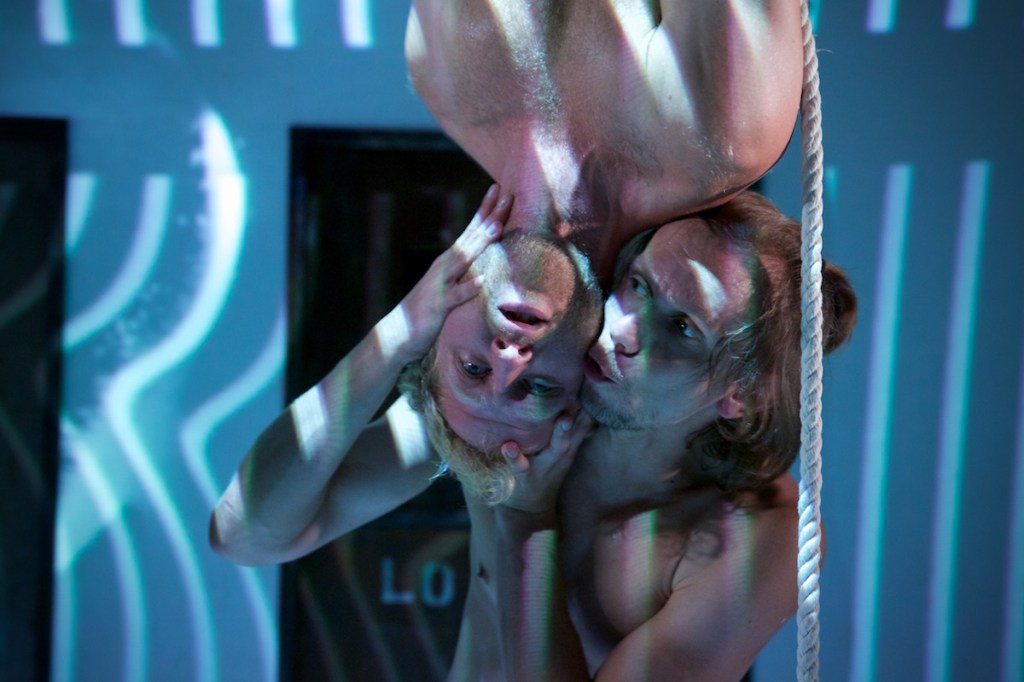
Maria Alekhina: Of course, not everything. Did you know how women give birth in detention centers? When labor starts, the woman is put into a police van, taken to the maternity hospital, handcuffed to a chair, and gives birth. Then she’s immediately taken back to the detention center, while the baby stays in the hospital. She’s left alone, with a fever of 40°C, her milk coming in, no medicine, and the baby is only brought back after several days. What I wanted to show was the everyday reality of this — to say that this happens every day, it’s nothing extraordinary or sensational. My story is not unique.
We just wanted to show the living person beneath the balaclava—not just a hero protesting against Putin. It’s important to understand that the play weaves together three stories: Maria Alekhina’s, Petr Pavlensky’s, and Oleg Sentsov’s. Our mission is to speak about what hasn’t been spoken before, to reveal painful moments people usually avoid. That’s the unique part of my story—strangers came together and started acting to free me. I believe I can pass this message on.
Kristina Moskalenko: How exactly? Through this play?
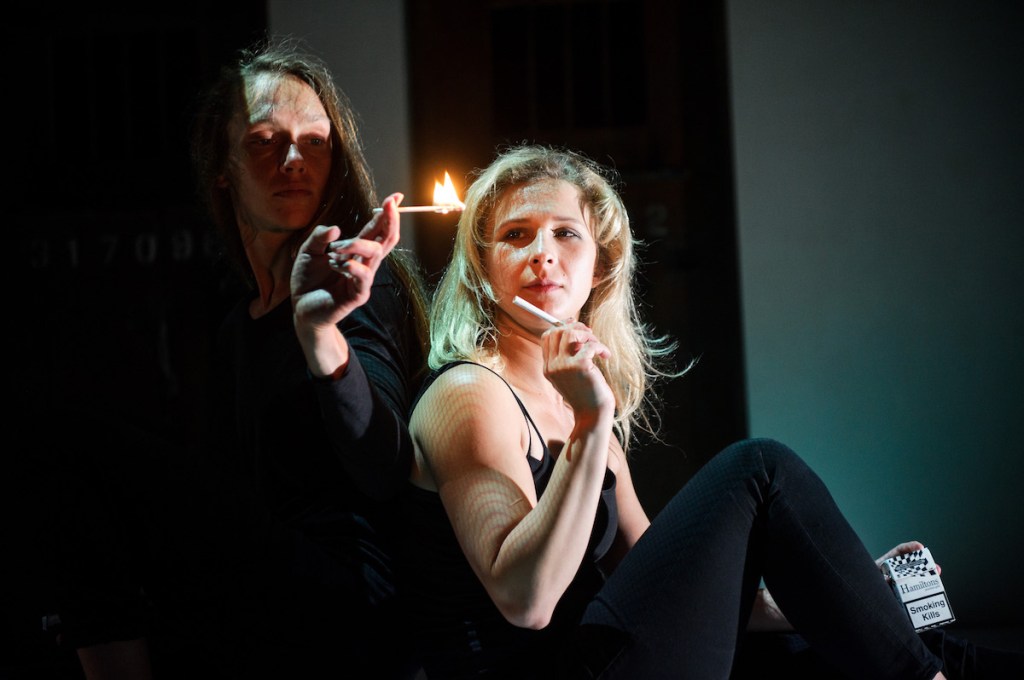
Maria Alekhina: The play Burning Doors is a living, breathing organism—part of the campaign to free Oleg Sentsov. Every audience member becomes a co-creator by simply showing up, contributing to the collective effort to liberate Oleg. The play’s powerful finale, where we say Sentsov has 18 years left to serve, can change—thanks to real people, real viewers. I truly believe we will free him. The wall of silence around Sentsov can be broken.
When his sentence was announced, I sat in the kitchen thinking: it’s autumn now, soon winter. I still remember those endless gray months in prison—it’s unbearable. And then I thought—he’s not facing two winters, but twenty. How do you live with that? When it feels like the world only consists of that stupid camp, with wake-up calls, roll calls, and the dining hall? You try to dive into a book, but they won’t let you, because reading means you’re doing nothing—and then you get sent to dig. Frozen ground? Keep digging. Two years is hard enough. Twenty?
Kristina Moskalenko: Maria, you’re a strong young woman—you could have a calm life, with your child. Why take this risk? Why do this?
Maria Alekhina: A kitchen career is not for me. It hurt a bit that my mother came to the play but didn’t realize I was telling my own story. She thought it was just part of the script. But this is my life. What happens on stage is real. I’m not some unique heroine—these stories happen every day, to many people. What’s important is understanding that we’re part of history, that we don’t just wake up every morning. We can face our stories and try to change something. Some people may be interested in stories about kitchen life and children. Not me. I need to talk about freedom. I feel we’re slowly losing the meaning of that word—everywhere, not just in Russia.
Kristina Moskalenko: Two Poems on Freedom in the Play — Who Are the Authors?
Maria Alekhina: In Burning Doors, two powerful poems about freedom stand out. One is by Jan Satunovsky, a voice of barrack-era lyricism from the 1950s–60s. He was part of the Lianozovo group, artists who creatively grappled with the Stalinist era. The other is Freedom by Paul Éluard, written in 1949—a wartime poem that strikingly resonates with today’s struggles.
Kristina Moskalenko: What Did Working in Theatre Teach You?
Maria Alekhina: Before the set arrived, rehearsals were like Dogville—everything mapped out on the floor. I kept bumping into “tables” and “walls” that weren’t really there. All my scenes are built either from parts of my book or transcripts of my conversations with the directors. These are my words—but when your words are printed and you have to memorize them, it feels impossible! I kept saying, “These aren’t my words—I can’t do this!” The director’s shouts of “Maria, the text!” still ring in my ears. They explained the play’s structure, but inside me, I resisted, quoting Guy Debord in my head. I thought, what about improvisation, life? But those were just excuses. After every show, I talk with the audience—I want to hear them, feel the room. This whole experience gave me something I missed working only with Pussy Riot.
Kristina Moskalenko: What Would Your Fellow Prisoners Say If They Saw the Play?
Maria Alekhina: There will be a free online streaming from Manchester on October 12th (at belarusfreetheatre.com). I hope those who are free will watch it and share their thoughts with me directly.
Kristina Moskalenko: And One Last Question People Ask After Pussy Riot’s Church Protest: Would You Ever “Do It in a Mosque”?
Maria Alekhina: Ha! Funny question—but I can’t come up with a funny answer that fast. I’ll leave that one open.
Originally published: https://angliya.com/publication/sto-minut-o-boli-i-nasilii/
 Articles on film, luxury lifestyle, culture and tech
Leave a comment