
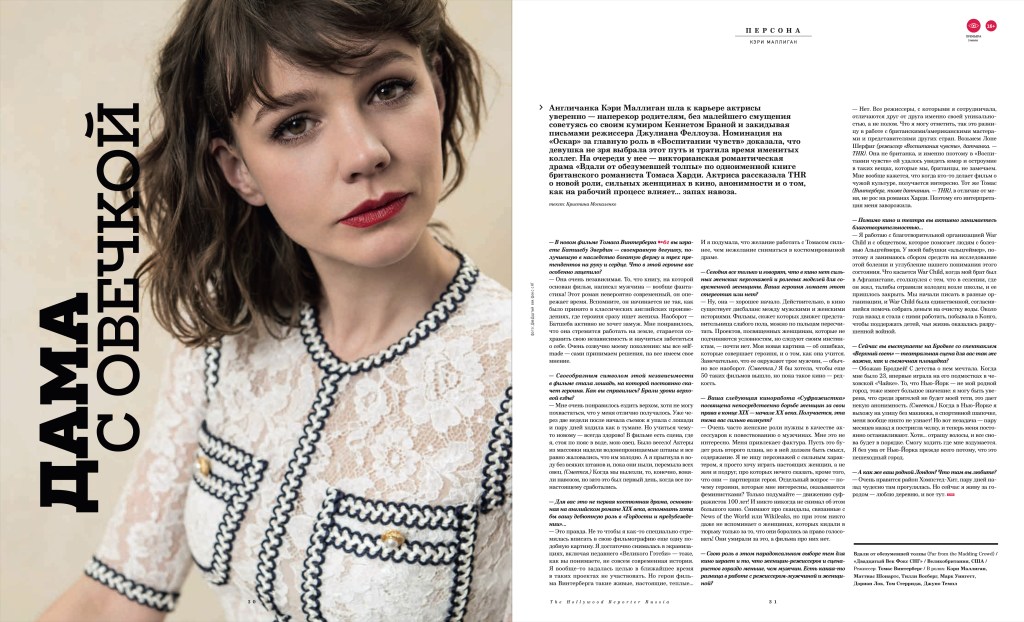
Interview by Kristina Moskalenko for The Hollywood Reporter Russia
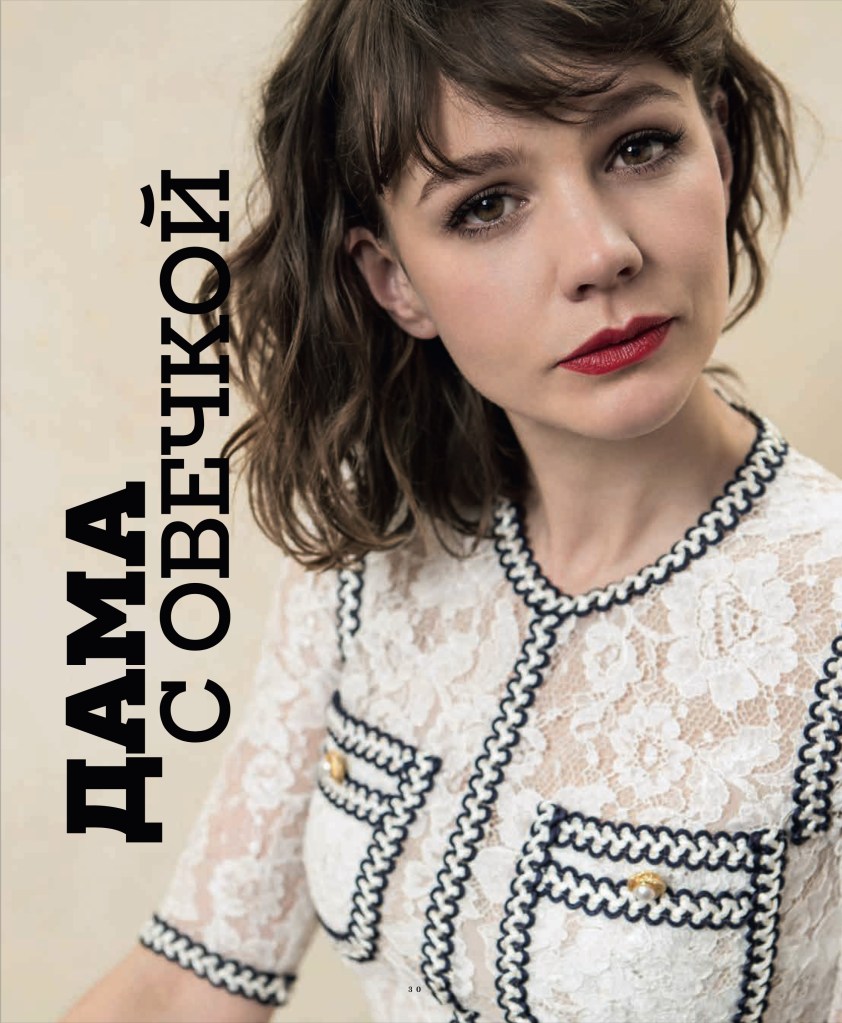
Carey Mulligan’s journey to becoming one of Britain’s most acclaimed actresses was anything but ordinary. Known for her fearless ambition and remarkable talent, Mulligan defied expectations — and even her parents’ wishes — to chase her acting dreams. She boldly reached out to legendary actor Kenneth Branagh for advice and famously sent a flood of letters to director Julian Fellowes, determined to make her mark in the industry.
Her breakout performance in An Education earned Mulligan an Academy Award nomination for Best Actress, solidifying her status as one of the leading talents of her generation.
Now, Mulligan stars in the highly anticipated period drama Far from the Madding Crowd, a film adaptation of Thomas Hardy’s classic novel. Set in Victorian England, the romantic drama showcases Mulligan’s ability to portray complex, independent women on screen.
In an interview with The Hollywood Reporter, Carey Mulligan opened up about her latest role, the evolving portrayal of strong female characters in film, why she values her relative anonymity — and how the unexpected smell of manure can shape a day on set.
Kristina Moskalenko: It’s not a love triangle on the way, it’s a love square! In Thomas Vinterberg’s new film, you play Bathsheba Everdene — a headstrong young woman who inherits a prosperous farm and finds herself pursued by three very different suitors. What drew you to this character?
Carey Mulligan: She’s incredibly independent. The fact that this novel — with such a modern female perspective — was written by a man is kind of mind-blowing. It’s so ahead of its time. It doesn’t open the way traditional English novels do, where the heroine is immediately on the hunt for a husband. Quite the opposite — Bathsheba is actively avoiding marriage. I loved that she wants to work the land, hold onto her independence, and figure out how to take care of herself. That really resonated with me. It feels very in tune with my generation — we’re all quite self-made, we have our own opinions and want to shape our lives on our own terms.
KM: In the film, the horse Bathsheba rides becomes a kind of symbol of that independence. Did you take riding lessons?
CM: I did! I actually really enjoyed it — although I wouldn’t say I was particularly good. About two weeks into filming, I fell off and spent the next couple of days wandering around in a bit of a haze. But I love learning new things, and riding was just part of the adventure. There’s a scene where I’m waist-deep in water, washing sheep. It was hilarious. The extras all put on waterproof trousers and still complained about the cold, and I just jumped in — no fancy gear. While they were whining, I got through all the sheep. (Laughs.) We all stank of manure when we came out of the water, but it was also the first day that felt like we’d really come together as a team.
KM: This isn’t your first period drama based on a 19th-century English novel — your debut was in Pride & Prejudice…
CM: That’s true. It’s not like I’ve made a conscious effort to add another period drama to my résumé. I’ve done quite a few adaptations already — including The Great Gatsby, which, as you know, isn’t exactly a contemporary story either. I actually told myself I’d take a break from those kinds of roles. But the characters in Vinterberg’s film felt so alive and real and warm… and the opportunity to work with Thomas was just too good to pass up, even if it meant going back to corsets.
KM: There’s a lot of discussion these days about the lack of strong female leads and modern role models for women in film. Do you think your character challenges that narrative?
CM: She’s definitely a step in the right direction. There’s still a real imbalance in cinema between male- and female-led stories. You can count on one hand the number of films where a woman really drives the plot. Stories about women who reject convention and follow their instincts are still incredibly rare. This film is about a woman making mistakes — and learning from them. I loved that she’s surrounded by three men, and not the other way around for once. (Laughs.) I’d love to see fifty more films like this one, but for now, they’re still the exception, not the rule.
KM: Your next project, Suffragette, focuses on the women’s rights movement at the turn of the 20th century. Is this an issue that feels particularly personal for you?
CM: It is. Too often, female roles are just decorative — they exist to support the male narrative. I’m not interested in that. I want texture. I don’t mind if it’s a supporting role, as long as there’s substance. I’m not specifically chasing “strong female characters” — I just want to play real women. Not wives or girlfriends whose only function is to be the love interest.
And here’s the thing — the women I’m drawn to often end up being called feminists. Suffragette tells the story of women who were jailed, brutalized, even died just for demanding the right to vote. And yet no one’s ever made a major film about them. We make films about News of the World, about Wikileaks… but no one talks about the women who changed the course of history and were punished for it. That’s a story worth telling.
KM: Part of the problem seems to be that there are still far fewer female directors and screenwriters in the industry. Do you feel there’s a difference working with male versus female directors?
CM: No, not in terms of gender. Every director I’ve worked with brings their own unique voice — it’s never about whether they’re a man or a woman. What I do notice, though, is the difference between working with British or American directors versus those from other countries.
Take Lone Scherfig, who directed An Education. She’s Danish, and that gave her a fresh perspective. She found humour and nuance in the story that, as Brits, we might have overlooked. I honestly think it’s fascinating when someone makes a film about a culture that isn’t their own — it can reveal things you don’t see from the inside. Same with Thomas Vinterberg. He’s Danish too, and unlike me, he didn’t grow up on Thomas Hardy novels. That distance let him see the material in a completely new way, and I found his take mesmerising.
KM: Beyond film and theatre, you’re also deeply involved in charity work…
CM: I work with War Child and with an organisation supporting people affected by Alzheimer’s. My grandmother had Alzheimer’s, so I’ve been involved in fundraising to support research and improve our understanding of the condition. As for War Child — my brother served in Afghanistan, and at one point, the village he was based in had its well poisoned by the Taliban. It was right next to a school, which then had to shut down. We started reaching out to various organizations, and War Child was the only one that stepped in to help raise funds to clean the water. About a year ago, I began working with them directly. I even went to Congo to meet children whose lives have been torn apart by war.
KM: You’re currently on Broadway in Skylight. Is the stage just as important to you as film?
CM: I love Broadway — it was a childhood dream of mine. I first performed here when I was 23, in Chekhov’s The Seagull. And the fact that New York isn’t my home city actually makes a difference — I don’t have to worry that my aunt is sitting in the audience! There’s a kind of anonymity to it. (Laughs.) I can walk down the street without makeup, in a beanie, and no one notices me. Though… a few months ago, I got a fringe cut and now people keep stopping me. But I’ll grow it out — then I’ll go back to walking wherever I want, undisturbed. I love New York mainly because it’s such a walking city.
KM: What about your hometown, London? What do you love there?
CM: I really love Hampstead Heath — I had the most beautiful walk there a couple of days ago. But right now I live outside the city. I’m definitely a countryside person, through and through.

 Articles on film, luxury lifestyle, culture and tech
Leave a comment