By Kristina Moskalenko for the Russian FT – Vedomosti
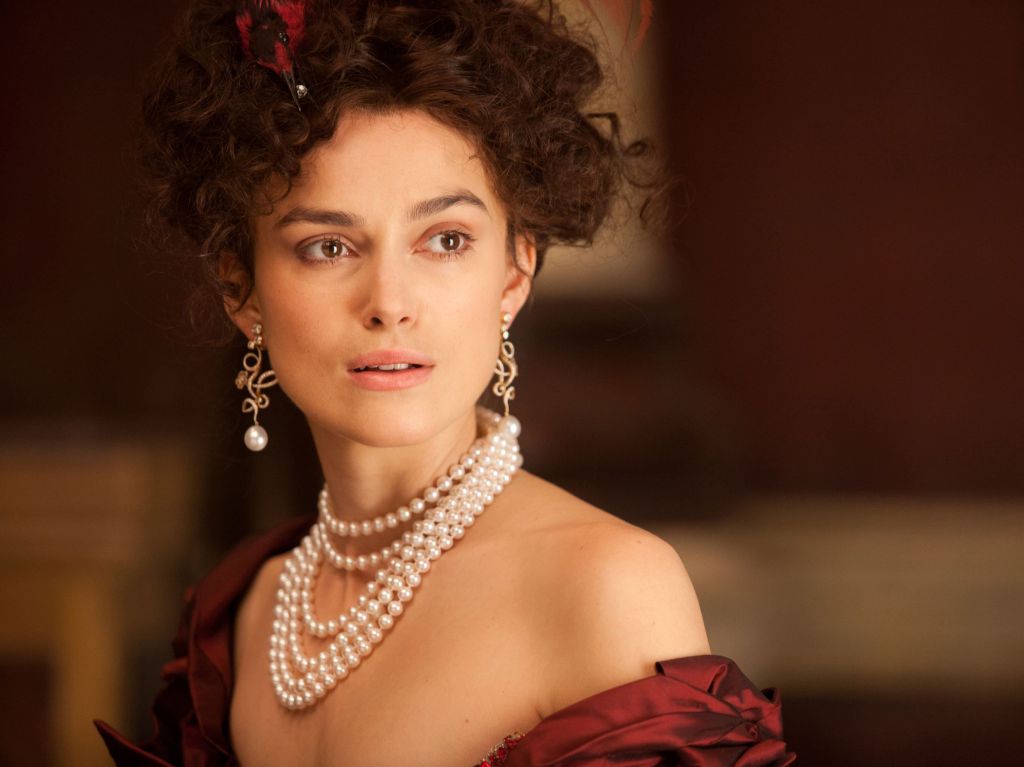
The highly anticipated—and inevitably controversial—cinematic adaptation of Anna Karenina by Leo Tolstoy is set to hit theaters on September 7. Keira Knightley, known for her powerful performances in period dramas, takes on the iconic role of Anna in this bold reimagining. The film is directed by British filmmaker Joe Wright, acclaimed for bringing literary masterpieces like Pride and Prejudice and Atonement to life. Joining him is legendary playwright Tom Stoppard, an expert on Russian culture, who crafts an imaginative screenplay that transforms the classic novel into a visually stunning experience.
This adaptation unfolds as a stylized theatrical spectacle, blending cinema, ballet, and drama in an ambitious artistic vision. Rather than relying on traditional period-piece aesthetics, Wright and Stoppard introduce an element of artifice, avoiding clichéd exoticism while staying remarkably true to Tolstoy’s original text. Moscow and St. Petersburg emerge as ornate, shifting stage sets, manipulated by an unseen director, while pre-revolutionary Russia is depicted as a surreal dreamscape. Yet within this highly choreographed world, its characters breathe with striking authenticity—whether it’s the endearingly awkward Levin (Domhnall Gleeson), the dashing yet fragile Vronsky (Aaron Taylor-Johnson), or the solemn, tormented Karenin (Jude Law in a transformative performance).
With a pulsating rhythm and emotional depth, the film avoids becoming a mere digest of events. What begins as an almost theatrical experiment gradually unfolds into a deeply moving drama, capturing the essence of Tolstoy’s vision. In an exclusive Keira Knightley interview, the actress opens up about the challenges and rewards of portraying Anna, her approach to the role, and the intricate dynamics of this Hollywood adaptation of a literary classic.
“I once viewed this story as a romantic tragedy. I believed Anna was blameless, a victim of her circumstances. Now, I see the novel in far darker hues.”
Kristina Moskalenko: How well-acquainted are you with Russian literature?
Keira Knightley: I first read War and Peace at seventeen, and at the time, I was utterly enthralled. A year later, I devoured Anna Karenina. Yet, for all my admiration, I knew little of Tolstoy himself. I have an enormous biography of him sitting on my shelf at home. Before filming, I began reading it, but quickly realised there simply weren’t enough hours in the day—to finish the biography, revisit Anna Karenina, and immerse myself in a book on Russian history essential for the role. Regretfully, the biography had to be set aside.
Kristina Moskalenko: Upon revisiting Anna Karenina, did your perception of it shift?
Keira Knightley: This was, in fact, the first book I had ever reread. As a younger reader, I saw it as a tale of doomed romance. I viewed Anna as wholly innocent, as though she were a celestial being cast down into a world too cruel to understand her. I believed the tragedy lay solely in how society condemned her. But reading it again, I found myself constantly thinking, “This is nothing like what I remember.” The novel revealed itself in much darker, more complex tones.
Kristina Moskalenko: When Joe Wright approached you for the role of Anna, did you accept immediately?
Keira Knightley: While filming Atonement, Joe and I once found ourselves discussing the portrayal of women in literature. Naturally, Anna Karenina arose in conversation. Two years later, he called and asked, “Do you remember that discussion?” I did. He simply chuckled and said, “Well then, what do you think?” How could I say no?
Kristina Moskalenko: How did you prepare for the role of a Russian woman?
Keira Knightley: This marks the third time I’ve portrayed a Russian woman, yet I have never set foot in Russia. I would love to immerse myself in its culture one day. That said, Anna Karenina is a novel that transcends geographical and cultural boundaries. At its heart, it is an exploration of human contradictions. No one is entirely virtuous or wholly corrupt. A person can be generous, kind, and full of warmth, yet still be capable of cruelty and destruction—just like Anna. Tolstoy’s brilliance lies in his ability to capture the entire spectrum of human frailty. That is what makes his work so compelling. And so wonderfully lengthy. (Laughs.)
Kristina Moskalenko: Had Anna been a British woman, might her fate have been different?
Keira Knightley: I doubt it. If a woman is married off too young, without love, then sooner or later, she will experience the intoxicating force of passion. And when she does, it will consume her, rendering everything else meaningless. This is not bound by nationality. In many societies, there is an unspoken rule: indulge your desires, but do so discreetly. This was just as true in 19th-century St. Petersburg’s aristocracy. In many ways, Anna Karenina is a novel about the search for truth and the refusal to live a lie. And yet, it is precisely this pursuit of truth that condemns Anna to her tragic end.
Kristina Moskalenko: What was the most challenging aspect of filming?
Keira Knightley: Technically, this was an immensely demanding production. Normally, when I perform an emotionally charged scene, we capture it within two or three takes. But Joe conceived this film as a grand theatrical performance. Instead of a few takes, we shot nine distinct versions of a single scene, each requiring up to 14 takes! Moreover, I had to execute movements with precise choreography—turning toward the camera at the exact moment a tear fell, ensuring it reflected in just the right part of a mirror, at precisely the second when the light caught my forehead…
Kristina Moskalenko: Russian audiences embrace the notion of “life as theater,” but your physique is quite unlike Tolstoy’s description of Anna.
Keira Knightley: It’s amusing—no one seems troubled by the fact that Vronsky, who in the novel begins to bald, remains entirely thick-haired in the film! If they had attempted to inflate me with prosthetics or padding, the audience wouldn’t be contemplating Anna’s character; they would be distracted, whispering, “Why on earth is Keira Knightley wearing a fat suit?”
Kristina Moskalenko: Was this a deliberate choice by Joe Wright—to disregard Tolstoy’s description of Anna?
Keira Knightley: This is always the challenge with literary adaptations. Every reader conjures their own vision of a character, yet no actor can perfectly embody every interpretation. I believe directors seek to capture the essence of a character rather than adhere rigidly to physical descriptions. When I played Cecilia Tallis in Atonement, she was meant to be a blonde with blue eyes, yet no one insisted on dyeing my hair. Likewise, neither Greta Garbo nor Vivien Leigh, both of whom played Anna Karenina, conformed to Tolstoy’s depiction. If audiences briefly think, “That’s not how I imagined Anna,” but soon become absorbed in the story, then the film has done its job.
A Bold New Take on a Timeless Classic
With its dream-like sets and nuanced performances, Anna Karenina offers a fresh perspective on Tolstoy’s epic. For Knightley, the role was both a challenge and a revelation, reshaping her understanding of love, tragedy, and the human condition.
As this stunning adaptation hits UK cinemas, it’s clear that Knightley’s Anna will spark conversation, whether among literary purists or first-time viewers. Prepare to be transported to a world where passion and consequence collide, and where the lines between stage and life blur in spectacular fashion.
Will you be watching Anna Karenina this January? Let us know your thoughts below!
Originally published at Vedomosti (FT/WSJ Franchise in Russia): https://www.vedomosti.ru/lifestyle/articles/2012/12/28/chto_dumaet_kira_najtli_ob_anne_kareninoj

 Articles on film, luxury lifestyle, culture and tech